Here's the truth nobody tells you
Pleasure and sensory overload can live in the same body at the same time. You're not broken if bright lights, unexpected vibrations, or certain textures trigger your fight-or-flight response. And you're absolutely not broken if you want to explore pleasure anyway.
The trick is finding a lemon vibrator (or any adult toy) that works with your nervous system instead of against it.
Why anxiety and sensory issues change the game
Your nervous system is doing its job when it flags potential threats. The problem is that sometimes it flags the wrong things. A sudden buzzing sensation, an unexpected texture, even the anticipation of pleasure itself can trigger a cascade of sensations that feel less like arousal and more like alert status.
People with generalized anxiety, ADHD, autism, trauma responses, or sensory processing differences often notice this. So do people with no diagnosed condition who just happen to be wired more sensitively. Both are legitimate.
What matters: the right lemon vibrator can actually help calm your nervous system down rather than amp it up. The design, the material, the pattern options, and how much control you have all factor into whether a toy becomes a source of pleasure or a source of stress.
Pattern control matters more than power
Most people assume vibrator choice comes down to intensity. For anxiety-prone or sensory-sensitive bodies, pattern variety is actually the priority.
Here's why. When you can control the rhythm and pattern of stimulation, your brain has time to process what's happening. Your nervous system stays engaged rather than startled. That's the difference between "oh, I like this" and "wait, what just happened?"
Look for a lemon vibrator with at least 5-7 distinct patterns. You want options that range from steady, predictable pulses to gentler waves. Start at the slowest, most boring pattern you can find. Let your body acclimate. Then you can explore faster or more complex rhythms if that appeals to you.
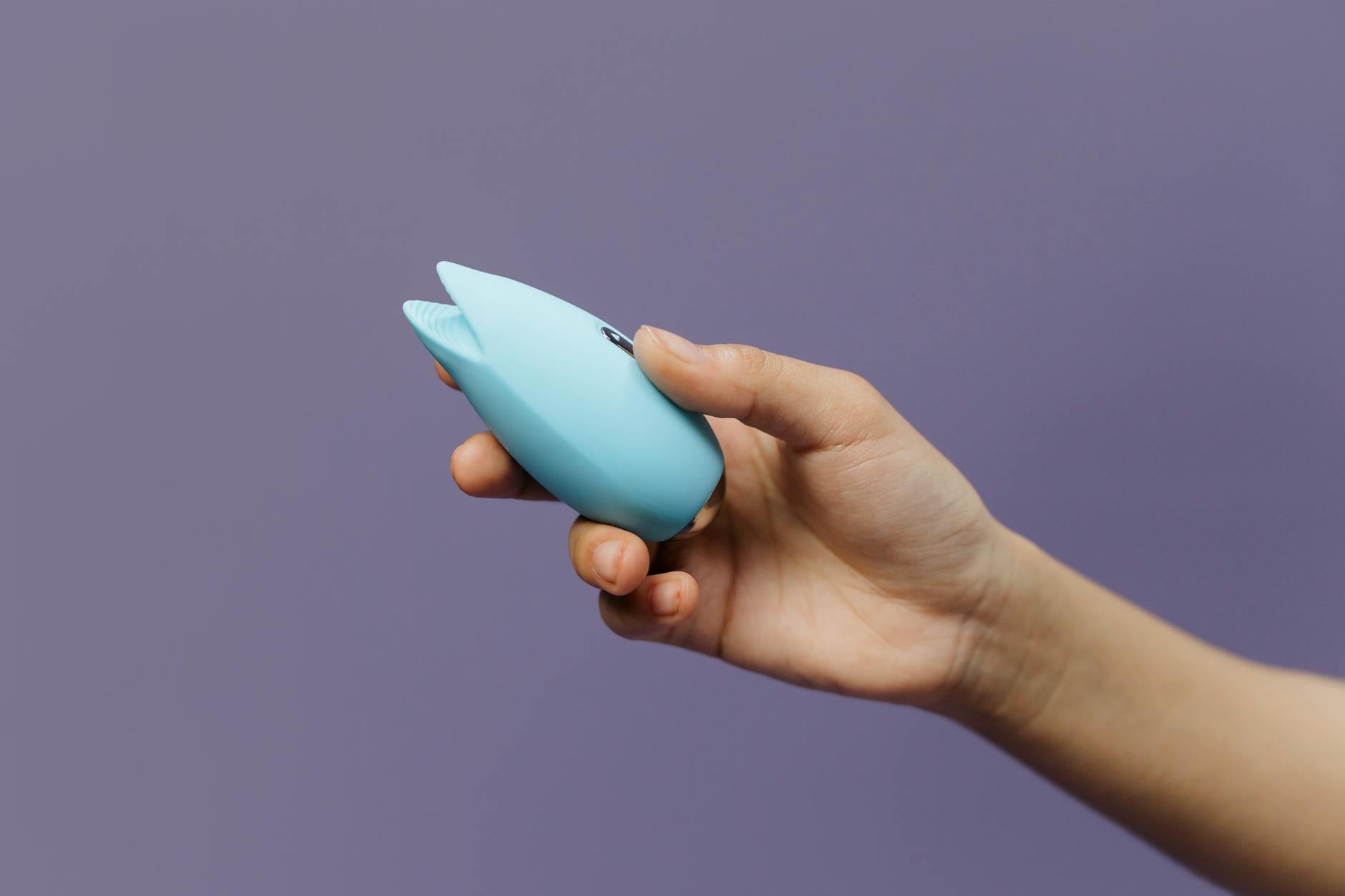
The Lemon clitoral vibrator, for example, offers multiple pattern options that let you build intensity slowly rather than jumping straight to overwhelming. That graduated control is exactly what an anxiety-sensitive nervous system needs.
Material is sensory real estate
Your vulva and clitoris are packed with nerve endings. The texture you're placing against them matters.
Medical-grade silicone is the standard for a reason. It's non-porous, easy to clean, and won't leach chemicals. But more important for sensory sensitivity: silicone feels predictable. It doesn't change temperature unexpectedly. It doesn't trap bacteria or develop rough spots.
If you have dermatitis, psoriasis, or general contact sensitivity, avoid toys with texture patterns unless you've tested them first. Smooth surfaces are your friend. Silicone without ridges, bumps, or pronounced seams means fewer surprise sensations that could trigger your anxiety response.
Also check the neckline of the toy (where the head meets the base). Seams or sharp transitions can feel jarring on sensitive skin. You want a seamless transition if possible.
Anticipation is half the anxiety
So much of sensory anxiety comes from not knowing what's about to happen. Your nervous system is bracing for a surprise.
This means the ability to see your toy, hold it comfortably, and start on the gentlest setting matters enormously. You need to feel in control. You need to be able to pause, adjust, or stop without fumbling.
Choose a lemon vibrator with clear button placement and feedback (you can feel when it's on, off, or changing patterns). Some toys vibrate to signal mode changes; others have tactile clicks. Either works as long as you can predict it.
Also: smaller toys often feel less intimidating to anxious brains. A compact lemon clitoral vibrator takes up less space, feels easier to handle, and allows more precise control over placement. You're not managing a large device while already managing anxiety.
Start with the lowest setting and the slowest pattern
This is non-negotiable advice if you have anxiety or sensory processing differences.
Setting 1, pattern 1, is where you begin. Not setting 2. Not the "I'll try medium intensity." Set it to the minimum and listen to your body.
Most people with anxiety skip this step because they're impatient or they assume they need higher intensity to feel anything. Neither is true. Your nervous system needs permission to relax into the experience. If you start too strong, you've instantly activated your threat response and you've lost the session before it began.
Take 3-5 minutes at the slowest speed. Notice what you feel. Does it feel good? Does it feel neutral? Does it feel alarming? All three answers are data. Only move to the next pattern or intensity when you feel genuinely ready.
External-only stimulation is often the way
Internally placed vibrators add complexity. You're managing external sensation plus internal pressure plus anticipation of how it'll feel as your body changes and responds.
For anxiety-prone bodies, external-only clitoral vibrators (like lemon vibrators designed for vulval contact) are simpler. You control exactly where the stimulation is happening. No surprises inside your body. No cognitive load managing multiple sensations at once.
You can explore internal play later, if ever. There's zero rush. External pleasure is its own complete experience.
Timing is a secret weapon
Don't reach for your lemon vibrator when you're already dysregulated. Don't use it when you're stressed about time or distracted by what comes next.
Create a small window where you have at least 20-30 minutes of actual unrushed time. Not time where you're watching the clock. Not time where your phone could buzz. This alone drops your baseline anxiety significantly.
If you have a partner, let them know you need uninterrupted space. You're not being difficult. You're removing barriers to your own pleasure.
Also notice your circadian rhythm. Some people's nervous systems are more regulation-friendly in the morning. Others are more open to sensation in the evening. Explore when your body feels most calm and receptive, then schedule your exploration around that window.
Lube is not optional for sensory sensitivity
Part of anxiety during pleasure is the fear of friction, irritation, or discomfort. Lube removes that variable.
A good water-based lubricant means your tissues aren't stressed, your clitoris isn't getting irritated, and you can focus on sensation rather than on "is this okay or is this about to hurt?" Your nervous system relaxes when there's no threat of friction or pain.
Reapply as needed. There's no such thing as too much. Your anxiety brain actually prefers abundance here.
Consider a wand vibrator if suction feels too intense
Clitoral suction toys (like air-pulse lemon vibrators) are powerful and popular. But for sensory-sensitive nervous systems, they can feel overwhelming or even painful if you're not ready for that intensity.
A traditional vibration pattern gives you more granular control over sensation. You can start at barely-there vibrations and build up. Suction is more all-or-nothing.
If you're new to toys or working with significant sensory sensitivities, start with a gentle vibrating lemon clitoral toy. You can always explore suction-style lemon vibrators later once you understand your own body and what intensity feels good.
The anxiety you feel might not be about the toy
Here's something important: sometimes the discomfort or anxiety you feel during solo pleasure has nothing to do with sensory sensitivity and everything to do with permission.
Many people (especially women and nonbinary people) grew up with complicated messages about pleasure. Guilt, shame, or the nagging sense that self-pleasure is selfish or wrong can feel identical to sensory anxiety. Your nervous system tenses because some part of you is bracing for judgment.
If you notice that you can relax into pleasure alone, in a safe space, with no one watching, that's data. It tells you the sensory anxiety might be secondary to something else: a boundary violation, or internalized messages you're working through.
In either case, you deserve pleasure. A good lemon vibrator can be part of reclaiming that. But if the anxiety persists, talking with a therapist who specializes in sexuality and trauma can help. Both paths forward are valid.
FAQ: sensory sensitivity and pleasure
Can I use a lemon vibrator if I have ADHD?
Absolutely. Many people with ADHD actually find that the sensory input from a gentle vibrator helps them focus on the present moment rather than spiraling into distraction. The key is starting low and having pattern control so you can adjust if the sensation becomes overwhelming. Some folks need the novelty and stimulation. Others find it too distracting. Your body will tell you which camp you're in.
What if the vibration feels painful rather than pleasurable?
Stop immediately. Don't push through. Pain is information. It might mean the intensity is too high, the pattern is too chaotic for your nervous system, or the positioning is causing irritation. It could also mean you're not actually aroused yet (lack of arousal can make even gentle vibration feel jarring). Try a lower setting, switch patterns, adjust positioning, or take a break. There's no prize for powering through discomfort.
Is it normal to feel anxious the first time I use a lemon vibrator?
Yes. You're introducing something new to your body, and your nervous system is (reasonably) cautious. That's not a red flag. It's expected. What matters is whether the anxiety decreases as you become familiar with the toy. If you're calmer on the second attempt than the first, that's progress. If the anxiety intensifies over time, that might mean this particular toy or approach isn't right for you.
Can anxiety about pleasure ever go away?
It can soften. As you have more positive experiences with your body and with tools like a good lemon vibrator, the anticipatory anxiety often decreases. Your nervous system learns that this scenario is safe. That learning takes time and repetition, but it's real. Give yourself grace with the timeline.
Should I tell my partner I'm using a vibrator if I have anxiety about it?
That depends entirely on your relationship and your comfort level. Some people find that telling their partner actually reduces anxiety because they're no longer managing a secret. Others find that keeping solo pleasure private (even in a partnered relationship) helps them separate their internal exploration from external performance pressure. Both are valid. Choose what feels less stressful to you.
What if my lemon vibrator makes me feel numb instead of sensitive?
Numbing during vibration can happen if you're tense, anxious, or if the pattern is too repetitive for your nervous system to stay engaged. Try taking breaks between patterns. Try switching patterns every 30-60 seconds so your nerve endings don't habituate. Try external lube to increase sensitivity. And try relaxing your pelvic floor (easier said than done, but worth practicing). If nothing helps, this toy might just not be your match, and that's fine.
The pleasure you deserve doesn't require a perfect nervous system
Sensory sensitivities, anxiety triggers, and a brain that processes stimulation intensely don't disqualify you from pleasure. They just mean you need a different approach.
A thoughtfully chosen lemon vibrator, paired with control, patience, and permission, can absolutely be part of reclaiming pleasure in a body that feels easily overwhelmed. You don't have to choose between managing your anxiety and having good sex. You get both.
Ready to explore? Start with the gentlest setting on a lemon clitoral vibrator with multiple patterns. Let your body lead. And remember: slow is not a weakness. Slow is exactly how your nervous system learns to trust pleasure again.
If you have questions about choosing the right toy for your specific sensitivities, reach out. We're here to help you find what works for you.