Here's the thing about timing
If your orgasms used to arrive in fifteen minutes and now they're showing up in thirty or forty, you're not broken. Your nervous system isn't malfunctioning. What's happening is real, common, and completely manageable once you stop treating it like a problem.
The tension starts when people use the same approach they always have but expect faster results. That's friction. That's frustration. And it's the exact opposite of what your body needs right now.
I've watched this play out hundreds of times in my practice. Someone who had a reliable pleasure response suddenly needs more foreplay, more time to warm up mentally, sometimes more variety in stimulation. They panic. Their partner panics. Nobody realizes this is actually workable with the right tools and a different game plan.
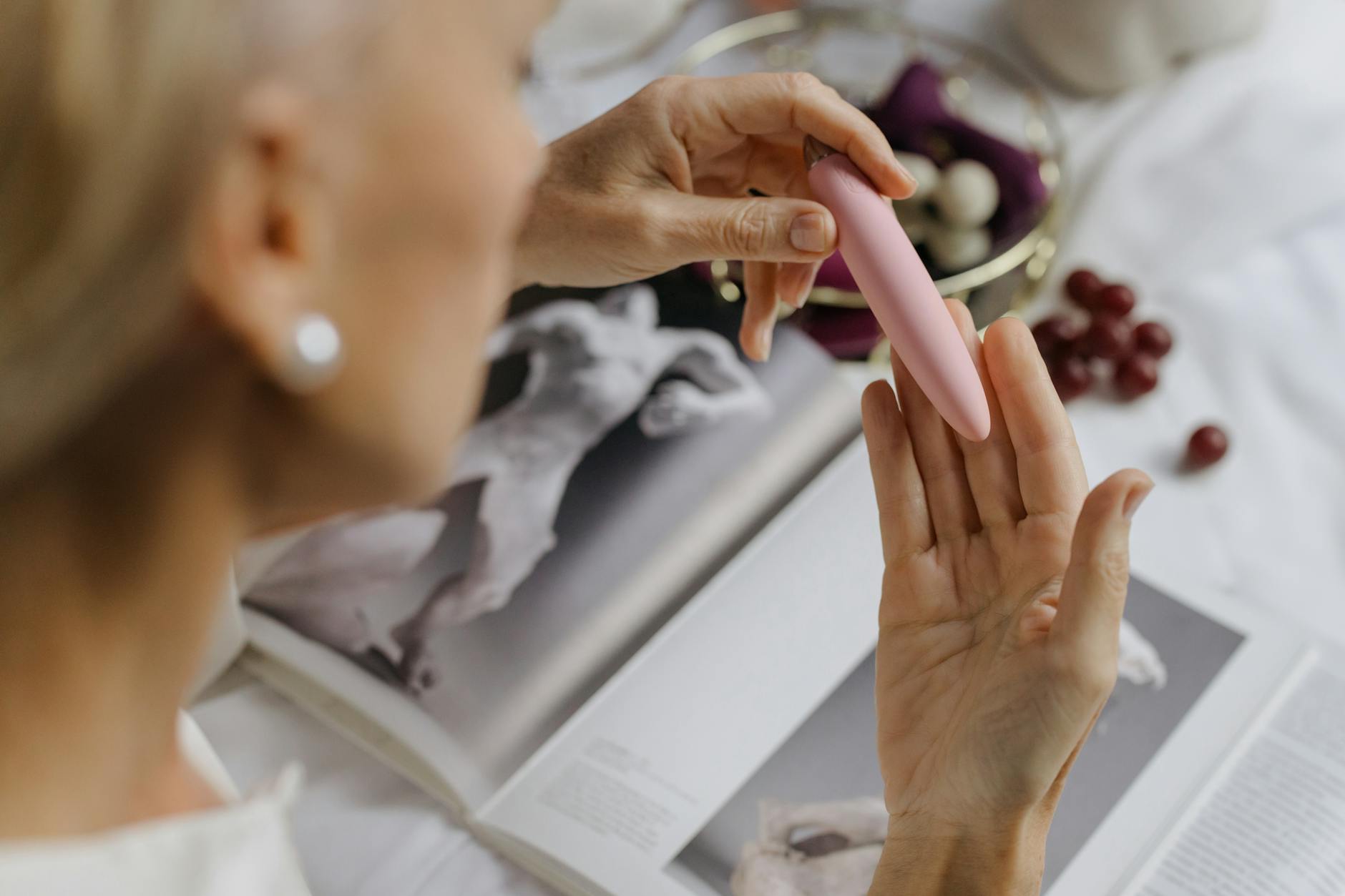
Lemon clitoral vibrators are built for exactly this. Not because they're magic, but because they're designed to create sustained, building sensation rather than immediate peak intensity.
Why arousal timelines shift
Life happens. Stress compresses your nervous system. Medications change how your body registers touch. Hormones fluctuate. You're older than you were five years ago, and your body's biochemistry reflects that.
The physiology here is straightforward. Arousal depends on blood flow, nerve sensitivity, mental focus, and a cascade of neurotransmitters all firing in sync. When any one of those changes, the timeline stretches. It's not worse. It's just different.
Partners sometimes interpret the delay as loss of desire. It rarely is. More often it's a change in the specific conditions your body needs to reach peak arousal. Maybe you need longer to stop thinking about work. Maybe you need different types of touch. Maybe you need external stimulation to build before internal sensation kicks in.
Understanding this distinction transforms everything. You're not defective. You've got new parameters. That's fixable.
The precision advantage of lemon clitoral vibrators for longer buildup
Most basic vibrators are designed for speed. On or off. High or low. Fast or faster. That works beautifully for people whose arousal crests quickly. For longer buildup? That design actually works against you.
Lemon clitoral vibrators work differently. They use pulsation patterns and variable intensity that reward patience instead of punishing it. You can stay at pattern 2 or 3 for five, ten, fifteen minutes. Your tissues warm up. Sensitivity increases. Blood flow builds gradually instead of hitting a wall immediately.
This is crucial because extended arousal depends on escalation. You want each minute to feel like progress. A vibrator that only offers maximum intensity on minute one leaves nowhere to go. Lemon vibrators give you a genuine progression. Start subtle. Add complexity. Build layers.
The mental setup that matters more than the toy itself
Honestly, the toy is the easy part. The mind is where people get stuck.
When arousal takes longer, your brain's old script fails. You used to follow a familiar tempo. Your body knew the rhythm. Now there's a mismatch between expectation and reality, and that gap creates tension. Tension kills arousal. So the first move is reframing.
Instead of "Why is this taking so long," try "I get to explore this differently." Instead of watching the clock, set a boundary. Give yourself thirty, forty, or sixty minutes. No timeline pressure. Within that space, curiosity replaces urgency.
With a partner, the conversation matters too. If you're trying to accommodate their timeline while worrying about your own, you're split. The best approach is honesty: "My arousal is slower now. That's not going anywhere. Here's what actually helps." Then show them. Demonstrate with a lemon clitoral vibrator. Let them watch. Let them participate.
That transparency takes shame out of the equation. Suddenly you're exploring together instead of performing for each other.
How to use lemon vibrators strategically for extended arousal
Start with warm water. Not as foreplay, but as part of the setup. A shower or bath five to ten minutes before helps blood flow and quiets mental chatter. You're literally warming your tissues and easing your nervous system toward receptivity.
Begin with clothing on. Seriously. Sensation awareness starts higher when there's a slight barrier. Hold your lemon clitoral vibrator through fabric on your inner thighs, lower abdomen, over the outer vulva. This primes your nervous system without overwhelming it. Three to five minutes minimum.
Then move directly to skin. Start at the lowest pattern. The point here isn't to rush. It's to establish a baseline that feels good but not urgent. Some people spend ten minutes here. Others need twenty. There's no timer.
After that foundation, add variation. Move between pattern 1 and pattern 2. Vary pressure. Shift angles. The goal is to create interest and escalation, not monotony. Monotony flattens arousal on longer timelines.
As sensation builds, you can increase intensity gradually. The difference between jumping to maximum on minute five versus reaching it on minute thirty-five is the difference between a quick spike and a sustained climb. The climb feels better and lasts longer.
If you're with a partner, they can hold the vibrator while you focus on mental engagement. Or you can guide their hand. Or they can touch other parts of you while you use the vibrator on yourself. The point is that external touch plus internal focus plus vibrator equals a more complex, richer sensory experience that justifies the longer timeline.
Managing frustration when you're partnered
This is where real tension lives. One person's new rhythm doesn't match the other's comfort with patience.
If your partner is used to quicker sessions, they might feel like they're doing something wrong now. They're not. Their role just changed. Instead of being the primary source of stimulation, they're now orchestrating a three-person conversation: you, them, and the lemon clitoral vibrator.
Make this explicit. Say: "I want you to stay connected while I use this. Touch me here. Watch me. Tell me what you notice." This keeps them engaged and removes the pressure to be the sole source of arousal.
If you're feeling vulnerable about needing more time, remember that vulnerability is actually what deepens connection. The willingness to say "I need more space to get there" and the willingness to provide it both strengthen intimacy.
Sometimes couples get tangled because one person feels rejected by the change. "You didn't used to need a vibrator." Reframe this fast: "I didn't used to need it. Now my body responds better with it. That's not about you. It's about matching my current physiology." The vibrator is a tool for shared pleasure, not a replacement for partnership.
What happens when you stop fighting the timeline
Here's what I see shift: people get more intense orgasms, not fewer. They get more pleasure overall, not less. They get more confidence, not shame.
Why? Because when you stop white-knuckling the old timeline and actually work with your body's current needs, arousal deepens instead of compressing. You're not rushing toward a finish line. You're building sensation deliberately. That takes you to different places.
Many people also report that partnered sex improves paradoxically. When there's less pressure to rush, partners relax. When partners relax, connection deepens. When connection deepens, arousal actually speeds up naturally because you're more present and more engaged.
So the longer timeline often isn't permanent. It's often what happens when your body and mind need to be met where they actually are. Meet that need for a few weeks or months, and sometimes the system recalibrates. Sometimes it stays slower. Either way, you're no longer fighting biology. You're working with it.
FAQ
Why does arousal take longer if I'm not less attracted to my partner?
Attraction and arousal are separate systems. You can be deeply attracted and still need more time for physical arousal to build. Hormones, stress, medication, age, sleep, and just the natural evolution of long-term partnership all affect arousal speed independent of desire. A lemon clitoral vibrator can bridge that gap by providing consistent, escalating stimulation while your mind catches up.
Can I use lemon clitoral vibrators alone if my partner isn't patient with the longer timeline?
Absolutely. Solo exploration with clitoral vibrators is actually where many people discover what their body genuinely wants without performance pressure. There's no clock, no negotiation, no judgment. Use that space to learn your new rhythm, figure out what patterns and intensity levels work, and build confidence. That knowledge carries into partnered sex.
Does using a vibrator make it harder to orgasm with a partner without one?
Not if you're strategic. Vibrators don't make your body dependent on them. What matters is variety. Use a vibrator sometimes. Don't use one other times. Mix manual stimulation with vibration. This keeps your nervous system responsive to multiple types of touch instead of desensitized to one.
How long should I actually wait before switching intensity levels with lemon vibrators?
There's no single answer, but a useful baseline is five to ten minutes at each level or pattern. If you're rushing through patterns trying to "build" faster, you're defeating the purpose. The whole point of a longer timeline is that your body needs that time. Let each stage settle. Let sensation deepen before you escalate.
What if my partner wants me to use a vibrator but I feel self-conscious about needing it?
Self-consciousness usually comes from the belief that needing a tool means something is wrong. It doesn't. Runners use special shoes. Musicians use amplifiers. You can use a clitoral vibrator. It's not a sign of failure. It's a sign of intentionality about your pleasure. If your partner genuinely wants you to experience more sensation, they're signaling that your pleasure matters. That's worth accepting.
Can a longer arousal timeline mean I've lost desire permanently?
Rarely. Usually it means your arousal pathway has shifted, not disappeared. The distinction matters. Low desire feels like "I don't want to." A longer timeline feels like "I want to, but I need more time and different conditions." If desire has genuinely disappeared, that's worth discussing with a healthcare provider. If it's just slower to activate, that's typically very workable with the right approach and tools.
You deserve an approach that actually fits
So many people waste years fighting their own bodies because they assume the problem is them instead of the mismatch between their current needs and their old strategy. It's not. You're not broken. Your body isn't failing you. You've just got new parameters.
Lemon clitoral vibrators are designed for this exact situation. They reward patience. They create escalation. They give you precision and control in a way that helps longer arousal timelines feel like richness instead of frustration.
The real shift happens when you stop seeing the longer buildup as a problem and start seeing it as information. Your body's telling you something about what it needs. Listen to that. Work with it. The pleasure on the other side is often better than what came before.
If you want to explore this further or discuss how to bring this conversation into your relationship, reach out. I'm here to help.