
Let's talk about what nobody mentions at the pharmacy
Antidepressants save lives. They also, for many people, make orgasms harder to reach or less intense. That's not a character flaw. That's not "all in your head." It's pharmacology. Your serotonin is being regulated, which affects dopamine, which affects nerve sensitivity, which affects how your body responds to touch. The chain reaction is real.
Here's what's wild: knowing that helps. Not because it fixes the problem magically, but because you stop blaming yourself. And then you can actually do something about it.
How SSRIs change sensation (the actual mechanism)
Most antidepressants work by increasing serotonin availability in your brain. That's good for mood regulation. But serotonin also influences arousal pathways and genital blood flow. When serotonin levels shift, your nervous system's response to stimulation changes too. Your clitoris might need more direct input to wake up. Your orgasm threshold might climb. Some people describe it as a muffling effect. Others say sensation feels flattened, like touching fabric instead of skin.
The timing matters. Some people feel this within weeks of starting medication. Others don't notice until months in, when they realize their baseline has quietly shifted. And yes, it can happen with any class of antidepressant, though SSRIs and SNRIs are the most common culprits.
Here's the thing people get wrong: switching medications or lowering your dose to restore sensation is rarely the answer. Your mental health matters more than anything else. The solution isn't to sacrifice your wellbeing for your sex life. The solution is to understand what's happening and adapt.
Why standard vibrators often don't cut it anymore
If you're used to a regular bullet vibrator or wand and suddenly it's not doing the job, your first instinct might be to buy something stronger. More vibrations per second. More power. Wrong direction.
When antidepressants mute sensation, raw power often backfires. It can feel numb even when the vibrator is working overtime. You end up grinding harder, holding it longer, and getting frustrated. Meanwhile, your tissues are being overstimulated without actually feeling stimulated.
Lemon clitoral vibrators work differently. Lemon toys use air-pulse suction technology instead of simple vibration. That matters because suction stimulates nerves in a completely different way than oscillation does. Instead of vibration passing through tissue, suction creates a gentle vacuum that draws the sensitive nerve endings toward the source. For muted sensation, this is often more effective.
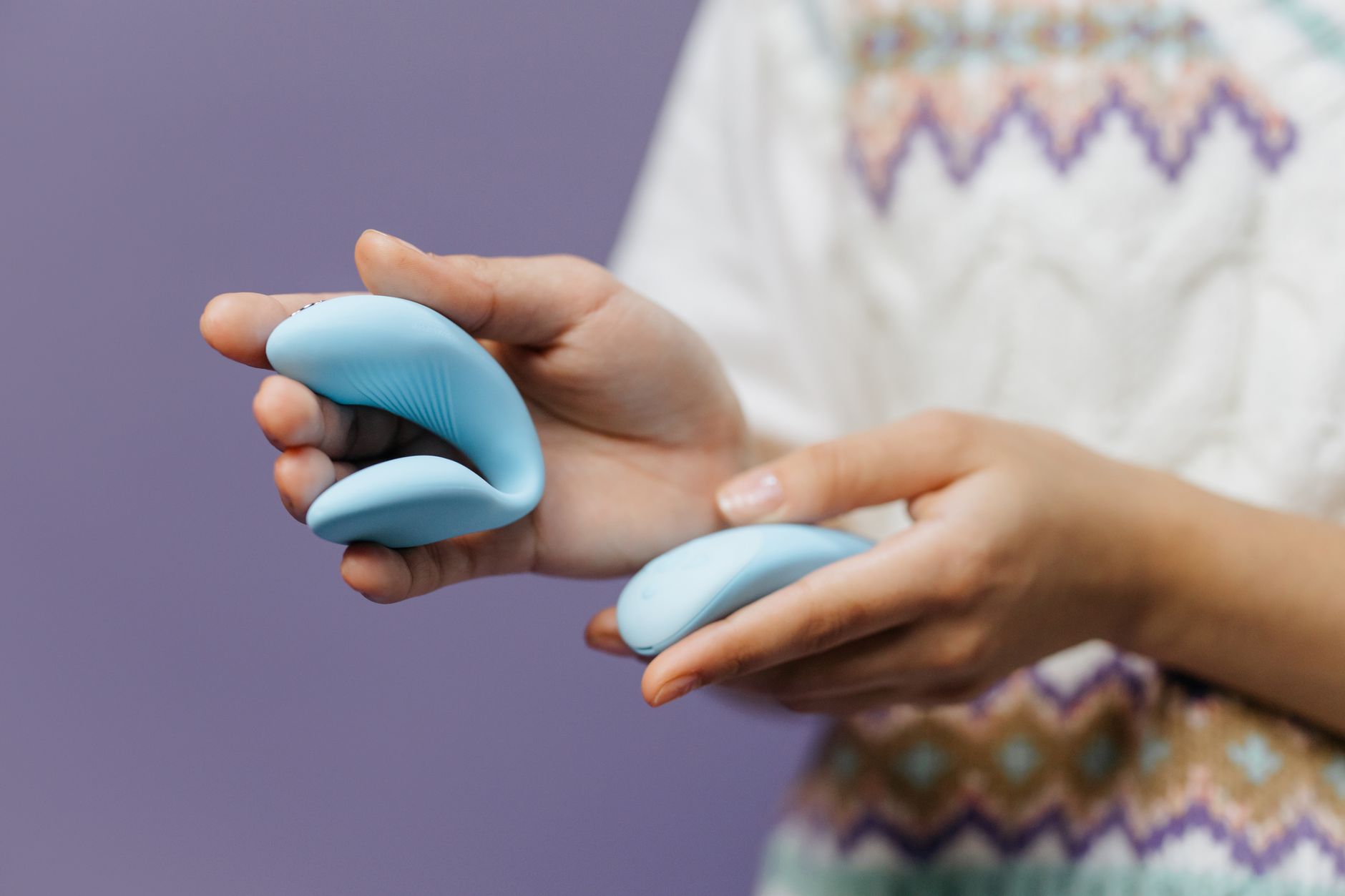
Photo by cottonbro studio on Pexels
It's the difference between someone tapping your shoulder and someone holding your hand. Both are touch. One gets your attention better.
The practical setup that actually works
Three changes that make the biggest difference when sensation is muted:
First, extend your warm-up. When your nervous system is running on antidepressants, arousal takes longer to build. Budget 20-30 minutes instead of the 5-10 you might have needed before. This isn't wasted time. Your body is still preparing, still building blood flow. You're just not feeling the incremental steps.
Second, start on the lowest setting. If you're using a Lemon vibrator or any air-pulse toy, patterns 1-2 are your starting point. Not because you're broken or because you can't handle intensity. But because low intensity often feels like nothing, and skipping to medium feels like you're jumping straight over the entire sensation range. Starting low lets you feel the gradation. You'll be surprised what becomes noticeable at pattern 3 when you didn't notice anything happening at pattern 1.
Third, pair it with lube. Water-based lubricant isn't just about comfort. It changes how suction works. It makes contact more consistent and reduces the likelihood that you're fighting friction instead of feeling stimulation. Good lubrication lets you focus on sensation instead of logistics.
Why your brain chemistry matters more than you think
Antidepressants affect more than just genital sensation. They can also affect arousal motivation. This is different from having no desire. You might want to have sex intellectually, but your brain isn't producing the neurochemical push that makes you seek it out.
This is worth naming because it changes what kind of help you need. If sensation is muted, a better vibrator helps. If motivation is low, the help you need might be different. It might be scheduling sex, or creating specific conditions that trigger desire, or adjusting the timing of your dose in conversation with your doctor.
Many of my clients find that using a lemon clitoral vibrator specifically is motivating because the experience is noticeably different. The suction sensation is novel if you're used to standard vibration. Novel input triggers arousal in a way that repetition doesn't. Curiosity becomes foreplay.
When to talk to your doctor (and what to actually say)
If sensation loss is severe, or if it's affecting your quality of life significantly, mention it at your next appointment. Your doctor isn't going to shame you. They've heard this before. They know it's a side effect.
Here's what helps them help you: be specific. "My orgasms feel less intense" is useful. "It takes twice as long to climax" is useful. "Sensation feels numb even when I'm aroused" is useful. Vague complaints about "not enjoying sex" are harder to work with.
Your doctor has options. Some people benefit from taking their dose at a different time of day. Some benefit from adding a second medication that counteracts sexual side effects. Some benefit from switching to a different antidepressant in the same class. But they can't recommend anything if they don't know what's happening.
On your end, try using lemon vibrators when you have sustained low sensation before assuming you need medication changes. Often, the right tool changes everything.
The solo vs. partnered difference
If you're exploring sensation solo, you have complete control over pace and pressure. That's actually an advantage when you're learning what your medicated body can feel.
If you're with a partner, the dynamic shifts. Your partner might be trying to do what used to work and getting frustrated. They might not understand that the slowdown isn't about them. This is worth talking about directly. A conversation like "My medication has muted sensation a bit, so we might need to spend more time on warm-up and try different kinds of touch" is infinitely better than silent frustration.
Some couples find that introducing a clitoral vibrator into partnered sex actually increases intimacy because it shifts the focus from "what's wrong" to "how do we explore this together." It becomes novelty instead of problem-solving.
What to expect your first few times
Don't expect immediate fireworks. If your nervous system has been running muted for months, sensation doesn't snap back to normal with one toy. But you might notice something different by the second or third time. A pattern on the Lemon vibrator that felt like nothing becomes noticeable. A setting you skipped becomes interesting.
Give it at least three uses before deciding whether a toy works for you. Your body is recalibrating. The first time is information gathering. The second time is baseline. The third time is when you start to feel the actual difference.
And remember: every antidepressant is different. Every body is different. What works for your friend might not be your answer. But the suction-based approach works often enough that it's worth trying before you assume antidepressants have permanently changed what pleasure is available to you.
They've changed the route. They haven't closed the door.
People also ask
Can I use lemon vibrators while on antidepressants?
Completely yes. There's no interaction between antidepressants and vibrators. In fact, using a clitoral vibrator might help restore sensation that the medication has muted. The concern isn't safety. The concern is whether a particular type of vibrator will actually feel noticeable given how your nervous system is currently processing stimulation.
Do all antidepressants cause sensation loss?
Not all, and not to the same degree. SSRIs and SNRIs are the most common culprits. Bupropion (Wellbutrin) is known for having fewer sexual side effects. But individual response varies wildly. Some people on SSRIs notice nothing. Others notice immediately. There's no way to predict your response until you try it.
How long does sensation loss last if I stop my antidepressant?
This varies. Some people report sensation returning within weeks. Others take months. And some people realize that stopping their medication isn't an option because their mental health depends on it. Which is why focusing on tools and techniques that work within your current medication plan is more practical than waiting for sensation to return on its own.
Are lemon clitoral vibrators better than other vibrators for muted sensation?
For many people, yes. Air-pulse suction stimulates nerves differently than vibration does. If you've tried standard vibrators and they feel ineffective, the change in stimulation style often makes a noticeable difference. But every body is different. Some people find that higher intensity vibration works fine. The only way to know is to try.
Will my sensation come back if I switch antidepressants?
Maybe. Some people switch to a different class and notice improvement. Some people switch and experience the same issue. Some people realize the original medication was worth the trade-off. Your doctor can walk through options, but there's no guaranteed outcome. Exploring sensation restoration tools alongside your medication is often a better bet than assuming a switch will fix everything.
How do I talk to my partner about antidepressant-related sensation loss?
Directly. Something like: "My medication has made sensation a little muted, which isn't about attraction to you. It's a side effect. Here's what might help." Introducing a tool like a lemon vibrator into the conversation frames it as "let's explore this together" instead of "something's broken." Many couples find that explicitly addressing the shift actually deepens intimacy because it moves the conversation from silent frustration to active problem-solving.