Let's be real about dryness
Vaginal dryness kills pleasure. Not because your body is wrong. Not because you're not interested. But because friction without lubrication turns sensation into discomfort, and discomfort kills arousal faster than almost anything else.
The weird part? Most conversations about dryness treat it as a medical problem that only doctors can fix. But here's what I see in practice: sometimes it's hormonal, sometimes it's medication-related, sometimes it's just a mismatch between your body and whatever you're using. And lemon clitoral vibrators, paired with smart lubrication, solve for a lot of it without a prescription.
Why lubrication matters more than you think
Your body produces natural lubrication when aroused. But "aroused" is not the same as "wet." Stress hormones suppress lubrication. Antihistamines dry you out. Low estrogen (whether from birth control, medication, or life stage) reduces the mucus your vagina naturally produces. Dehydration, alcohol, and even low-quality sleep affect it.
Here's the thing nobody tells you: clitoral stimulation doesn't require the same kind of lubrication that penetration does. Your clitoris doesn't need internal moisture. But if you're going to use anything on or around your vulva—especially something with texture or movement—you want a protective layer. That's where understanding the relationship between lemon vibrators and lube becomes genuinely useful.
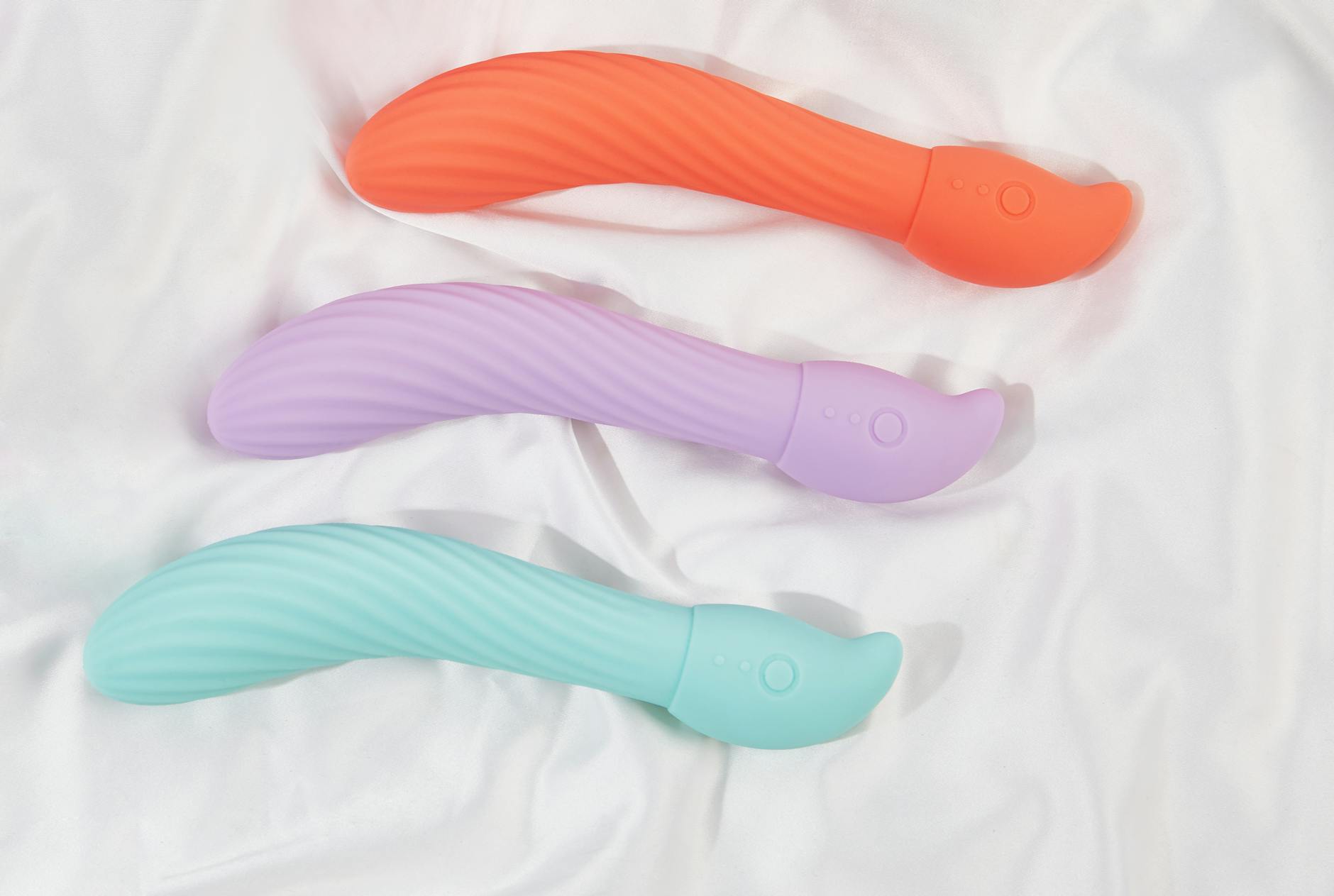
Photo by IFONNX Toys on Pexels
Water-based vs. silicone lube: the actual tradeoff
Most guides say "water-based lube is best." Here's what that really means and why it matters.
Water-based lubrication absorbs into the body fast. It feels lighter, less sticky, and washes off easily. The downside: it dries out. If you're using a lemon sucker or any vibrator for longer than 10-15 minutes, you'll feel it start to drag. You'll either need to reapply constantly or switch to something heavier.
Silicone-based lubrication stays put. It feels richer, lasts through longer sessions, and has that premium glide that some people find instantly more pleasurable. The catch: silicone lube damages silicone toys over time. If your lemon vibrator has a silicone exterior, you're either using water-based or you're counting down to degradation.
Hybrid lubes exist (oil-and-water blends), but they're a middle ground—not as slick as silicone, not as practical as water-based. Pick your priority: comfort throughout the session, or equipment longevity.
The lemon vibrator and lubrication partnership
Lemon clitoral vibrators work through suction and pulsation. They don't require the kind of deep glide that internal vibrators need. That's actually an advantage when you're dealing with dryness.
Suction-based stimulation—which is how the lemon design functions—stimulates nerve endings without depending on friction. The lubrication here isn't about creating a frictionless surface. It's about comfort. It's about preventing any drying sensation on sensitive tissue. You need less lube with a lemon sucker than you would with a traditional vibrator, and you can get away with water-based since you're not expecting it to last through heavy friction.
Here's the practical workflow: apply a generous coin-sized amount of lube to the external opening where the suction will happen. The vibrator itself will distribute it during use. You're not doing a full coating of your entire vulva. You're creating a comfortable barrier at the point of contact.
Timing, arousal, and lubrication readiness
Lubricant isn't a substitute for arousal, but it is a tool for getting there when your body isn't cooperating.
If dryness is the problem, most people assume it means "I'm not turned on." Often true. Sometimes not. Stress, dehydration, hormonal fluctuations, and medication all create physical dryness independent of mental desire. So applying lube first, then using a lemon vibrator, actually changes the pathway. The physical comfort creates the mental permission to relax. The sensation from the suction builds arousal. You're not faking it. You're just removing the friction barrier that was preventing your body from doing what it wanted to do.
Budget 10-15 minutes. Apply lube. Start on the lowest or second-lowest setting. Let sensation build. Increase intensity once you feel the body responding. This rhythm matters because it gives your nervous system time to shift from stress to pleasure, and it protects delicate tissue from over-stimulation when it's already compromised by dryness.
Reapplication during longer sessions
If water-based lube is your choice—which it should be if you're using a lemon vibrator—you'll need to reapply. Most people don't plan for this, and then they're awkwardly stopping mid-experience to grab more.
Here's the solution: keep it within arm's reach. Small water-based bottles are designed for exactly this. Take a 30-second break, add more, resume. It's not a mood killer if you frame it as self-care. "I'm taking a beat to make sure this feels amazing" is fundamentally different from "my body's not working." Same action, entirely different emotional experience.
When dryness is telling you something bigger
Sometimes dryness is situational. You're stressed, dehydrated, on a new medication. Lube plus a lemon vibrator solves it.
Sometimes it's persistent. You're addressing hydration, you're not on medications that cause it, stress is normal, and you're still consistently dry. That's the moment to see a doctor. Vaginal dryness can signal hormonal shifts, autoimmune conditions, or other things worth knowing about. Lube and vibrators are tools, not diagnoses.
Similarly, if you notice pain beyond just dryness discomfort—sharp pain, burning that doesn't improve with lube, or tissue that looks inflamed—stop and book an appointment. That's not a vibrator problem. That's a body-check problem.
Building confidence with sensation again
Dryness often creates a psychological loop. Your body doesn't lubricate. You try anyway. It's uncomfortable. You stop trying. Your brain learns that sex is uncomfortable, so arousal drops further, making dryness worse. The loop solidifies.
Breaking it requires removing the discomfort first. That's why starting with deliberate lubrication and a tool like a lemon vibrator—something that creates sensation without requiring friction—is such a practical reset. You're not forcing pleasure. You're creating the physical conditions where pleasure can happen.
Most of my clients who've struggled with dryness and used lemon clitoral vibrators report that once they've had a few comfortable experiences, their body starts cooperating on its own. The nervous system relaxes. Natural lubrication improves. The vibrator becomes less necessary. But having that reliable backup is everything.
FAQ
Can I use a lemon vibrator if I'm on hormone replacement therapy?
Absolutely. Hormone replacement therapy actually often improves vaginal tissue quality and natural lubrication over time. During the transition period while your body adjusts, lube plus a lemon vibrator is even more useful because you're managing the discomfort while the hormones do their work. You're not working against anything. You're removing friction while healing happens.
Is there a lube I can use that won't leave residue on the vibrator?
Water-based lubes rinse clean and dry clear. Silicone lubes leave a coating that protects the toy but can accumulate over time. If residue bothers you, water-based is your answer. Rinse the vibrator after each use under warm running water. Dry thoroughly before storage. This takes 30 seconds and keeps the toy in perfect condition.
What if I'm sensitive to common lubricants?
Some people react to glycerin, parabens, or certain thickening agents in commercial lubes. If you're in that group, look for lubes labeled "hypoallergenic" or "sensitive skin." Or go old school: coconut oil works as a lubricant (though it's incompatible with latex condoms and silicone toys). Test a small amount on non-sensitive skin first to confirm you're not reactive.
Does using a lemon vibrator actually increase natural lubrication over time?
Yes, but indirectly. Regular, pleasurable sexual stimulation does improve arousal and natural lubrication responses because it trains your nervous system to shift into pleasure mode more readily. Using a lemon sucker and lube to create comfortable experiences is part of rebuilding that capacity. You're not retraining your body. You're removing the trauma of discomfort so your body can respond normally again.
Can dryness affect my ability to orgasm with a lemon vibrator?
Completely. Discomfort is a powerful arousal killer. When your tissues are dry and sensitive, the stimulation from a vibrator can feel irritating instead of pleasurable. That's not a vibrator failure. That's a lubrication failure. Fix the dryness, and most people find orgasm becomes straightforward again. The capacity is there. The barrier was friction.
How do I know if I need to see a doctor about my dryness?
See a doctor if: dryness is persistent despite consistent hydration and stress management, if it's accompanied by burning or pain that lube doesn't relieve, if you're noticing tissue changes, or if it started suddenly alongside other symptoms. You don't need a reason to see a doctor. You just need to notice that something feels off and want clarity. That's enough.
Your pleasure is worth the logistics
Using lube with a lemon vibrator is not complicated. It's not a workaround for a broken body. It's a straightforward approach to managing dryness so you can access sensation again. Water-based lubrication, strategic application, and a tool like a lemon clitoral vibrator designed for suction-based stimulation. That combination works. Your body isn't the problem. The friction was. Remove it, and feel what's actually there.