You just grew and delivered a human. Your body deserves to feel good again.
Postpartum numbness is one of those things nobody warns you about. Your OB checks your stitches, your partner marvels at your resilience, and you're sitting there thinking: why do I feel like someone turned down the volume on my entire lower body?
Here's the honest part: it's completely normal. And it's temporary. But the timeline varies wildly, which is why so many people think something's wrong. Spoiler: it usually isn't. What you're experiencing is a combination of tissue trauma, nerve recovery, hormonal freefall, and often, exhaustion so deep it makes pleasure feel like a foreign concept.
I've worked with hundreds of postpartum clients. The ones who recover sensation fastest aren't the ones who jump back into partnered sex. They're the ones who give themselves permission to explore their own pleasure first, with tools designed for exactly this moment.
What's actually happening to your body right now
Let's start with the physical reality. Vaginal childbirth creates microtears (and sometimes bigger ones) in the tissue. Even with no tearing, the stretching itself triggers swelling, which dulls nerve sensation for weeks. Your estrogen has bottomed out. If you're breastfeeding, it stays low. Oxytocin, the hormone that drives arousal and orgasm, is being redirected toward bonding with a tiny human instead of toward your own pleasure.
Your pelvic floor is also relearning how to function. It's either tight from guarding against pain, or slack from being overstretched, and sometimes both in different spots. That affects how stimulation feels and how easily you can orgasm.
Add sleep deprivation, the constant low-level stress of newborn care, and the fact that your body still isn't entirely yours, and you've got a recipe for numbness that feels way more permanent than it actually is.
But here's what I tell every client: sensation almost always comes back. And when it does, it's often richer than before.
The timeline (and why you shouldn't panic if you're not on it)
Most people start noticing sensation returning between 6 and 12 weeks postpartum. Some take longer. That's okay. Some take months. That's okay too.
The thing is, sensation doesn't return all at once. You might notice your clitoral area waking up before deeper tissues. You might find that some days feel numb and others feel almost normal. Both are signs of healing, not setbacks.
If you had a perineal tear, stitches, or a cesarean section, give yourself the extra grace. Your body's recovery timeline is legitimate and longer. And if you're not cleared for penetration by your doctor, that's non-negotiable. But external stimulation, which is what lemon vibrators deliver, is almost always safe way earlier.
Why lemon clitoral vibrators work so well right now
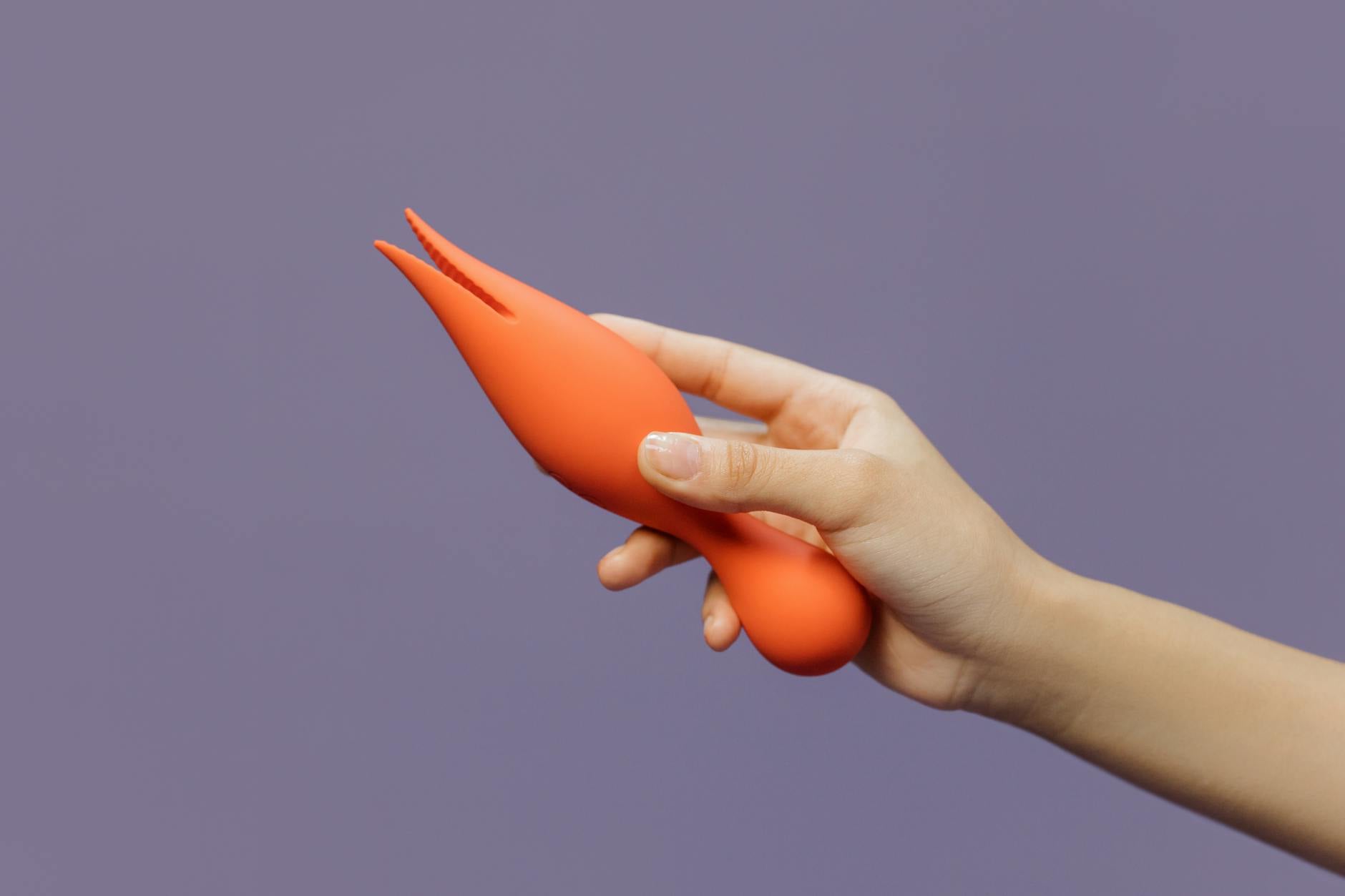
Lemon Toys makes lemon vibrators and clitoral vibrators specifically engineered for precision stimulation without pressure. That matters enormously postpartum.
Your clitoris has thousands of nerve endings, and right now, those nerves are basically waking up from anesthesia. What you need is gentle, consistent stimulation that doesn't demand your body to perform. Air-suction technology in lemon vibrators creates a soft pulse rather than direct friction. That means no jarring pressure on healing tissue, no need to build arousal at maximum speed, and a sensation profile that actually feels good when your body's still learning what good feels like.
You're not trying to prove anything. You're not racing toward an orgasm. You're just slowly reintroducing sensation to a part of your body that's been through a lot.
How to actually start exploring again
Four guidelines that matter:
First, get medical clearance. Your OB or midwife needs to sign off. Usually that's 6 weeks, but sometimes longer. Don't skip this step. You're not being paranoid. You're being smart.
Second, choose a time when you're actually rested. I know that sounds like a joke when you have a newborn. It's not. Your pleasure response tanks when you're running on fumes. This doesn't have to be elaborate. It's 15 minutes when your partner's with the baby, or when the baby's napping and you've actually slept yourself.
Third, start with very low settings. A lemon clitoral vibrator on pattern 1 or 2 is genuinely different from pattern 5. Spend time at the low end. Your body's not lazy. It's just relearning. Patience is actually the move here.
Fourth, use water-based lubricant. Your natural lubrication is still rebuilding. That's not a sign of dysfunction. It's a sign your hormones are recalibrating. Lube makes everything easier and safer.
What you're likely to feel (and what it means)
Some clients report tingling or almost a "pins and needles" sensation when they start exploring again. That's nerves waking up. It's uncomfortable sometimes, but it's healing, not harmful.
Others feel almost nothing the first few times. Then, suddenly, on week eight or ten, sensation floods back. The brain's amazing that way. Your body's neurological system is remapping itself, and it doesn't follow a customer-service timeline.
Some people find that orgasms feel different postpartum. Shallower, or more localized. Some feel more intense. Some take longer to build. All of that is normal. Your pelvic floor's reorganized. Your hormones are completely different. Your brain's running on less sleep. Of course orgasms feel different. They'll settle into a new normal.
The important part: you're exploring on your timeline, with tools built for this exact situation, without pressure to perform or prove anything.
What helps beyond the vibrator
Honestly, the lemon vibrator is maybe 40% of the equation.
The other 60% is rest, hydration, and not adding pressure to yourself. If your partner wants to jump back into partnered sex and you're not feeling it, that's information, not a problem. If touching yourself feels overwhelming, that's also information. Postpartum is a season of massive change. Your pleasure will come back, but trying to force it on a timeline usually backfires.
If you're breastfeeding, your touch sensitivity might actually feel irritated for a while. That's hormonal and temporary. It doesn't mean anything about your desire or capacity for pleasure. It means your body's priorities are temporarily elsewhere.
Do pelvic floor work, but gently. Kegels are useful eventually, but not right now when your pelvic floor might already be guarding. Breathing, stretching, and gentle walks matter more in the early weeks.
And talk to your partner about what's happening. Not in a defensive way, but in a "my body's on a healing timeline and here's what that looks like" way. Most partners respond way better to clarity than to silence.
When to check in with your doctor
If numbness persists past six months, mention it to your OB. If sensation starts returning and then suddenly disappears again, same thing. If you're having pain (not just sensation oddness, but actual pain), definitely flag it.
Postpartum nerve damage is rare, but it happens, and it's very treatable. Pelvic floor physical therapy helps if you're noticing dysfunction beyond the normal "my body feels weird" phase.
Most of the time, though, what feels like permanent change is just your body adjusting. You haven't lost anything. You're in the middle of getting it back.
The bigger picture
You grew a human. Your body is resilient and extraordinary. Right now, sensation might feel like it's gone. It's not. It's dormant. And when it returns, it has permission to be different from before, and that's completely fine.
Lemon vibrators, specifically lemon clitoral vibrators, give you a way to gently reintroduce pleasure without pressure or performance. No racing. No proving anything. Just your body, on its timeline, remembering how to feel good.
That's the whole point.
People also ask
When is it actually safe to use a lemon vibrator after childbirth?
Always wait for your doctor's clearance, which is typically six weeks postpartum but can be longer if you had a difficult birth or cesarean. Once cleared for internal activity, you're definitely cleared for external stimulation. Your clitoris has less healing to do than internal tissues, so it often tolerates gentle stimulation earlier. Start conservatively. Use low settings. Pay attention to your body's feedback.
Can lemon vibrators help with postpartum depression or sexual dysfunction?
Pleasure stimulates dopamine, which absolutely helps with mood. But if you're experiencing postpartum depression, a vibrator isn't the treatment. It's a complement to professional support. Talk to your therapist or doctor. Pleasure matters, but so does clinical care. The two aren't mutually exclusive.
What if I feel touched out all the time and the idea of using any vibrator feels overwhelming?
That's incredibly common and completely valid. Your body's been occupied by pregnancy, then birth, then possibly breastfeeding, and now you're managing a newborn. The idea of voluntarily adding more touch can feel suffocating. Skip the vibrator for now. Come back to it when the idea doesn't make you want to hide. Your timeline isn't behind.
Will sensation eventually feel the same as before pregnancy?
Maybe. Sometimes it does. Sometimes it's different in ways you didn't expect. Some people find their pleasure response actually improves after childbirth because they're more confident in their bodies or less worried about performance. The goal isn't to recreate before. It's to discover what's possible now.
Do I need to tell my partner I'm using a lemon vibrator postpartum?
That depends on your relationship and comfort level. Some couples make it a shared thing. Some people explore privately first and then introduce it to partnered sex. Both are fine. What matters is that you're not doing it out of shame or hiding it out of fear. That energy undermines the whole point.
Is there anything I should avoid while postpartum and using clitoral vibrators?
Avoid penetration until cleared by your doctor. Avoid forcing orgasm if it's not happening. Avoid comparing your postpartum pleasure to your pre-pregnancy experience. Avoid guilt if you're not interested yet. Avoid pressure from a partner. Everything else is basically fair game, and most people benefit from starting with lower vibration settings and gradually increasing as sensation returns.
You're not broken. You're healing.
Postpartum numbness feels permanent while you're in it. I promise it isn't. Your body is one of the most adaptive systems on earth. Sensation returns. Pleasure returns. And when it does, you get to decide what that looks like.
If you want to explore with a tool designed for exactly this moment, lemon vibrators are built for precision and gentle stimulation. If you want to wait longer, that's fine too. Your body's timeline is the right timeline.
Whatever you choose, do it for yourself, not because you think you should. That's when it actually works.
Have questions about your postpartum recovery or ready to explore your pleasure on your own terms? Reach out to us. We're here to support your healing and your pleasure.
This article is informational and not a substitute for medical advice. Always consult your healthcare provider before resuming sexual activity postpartum.