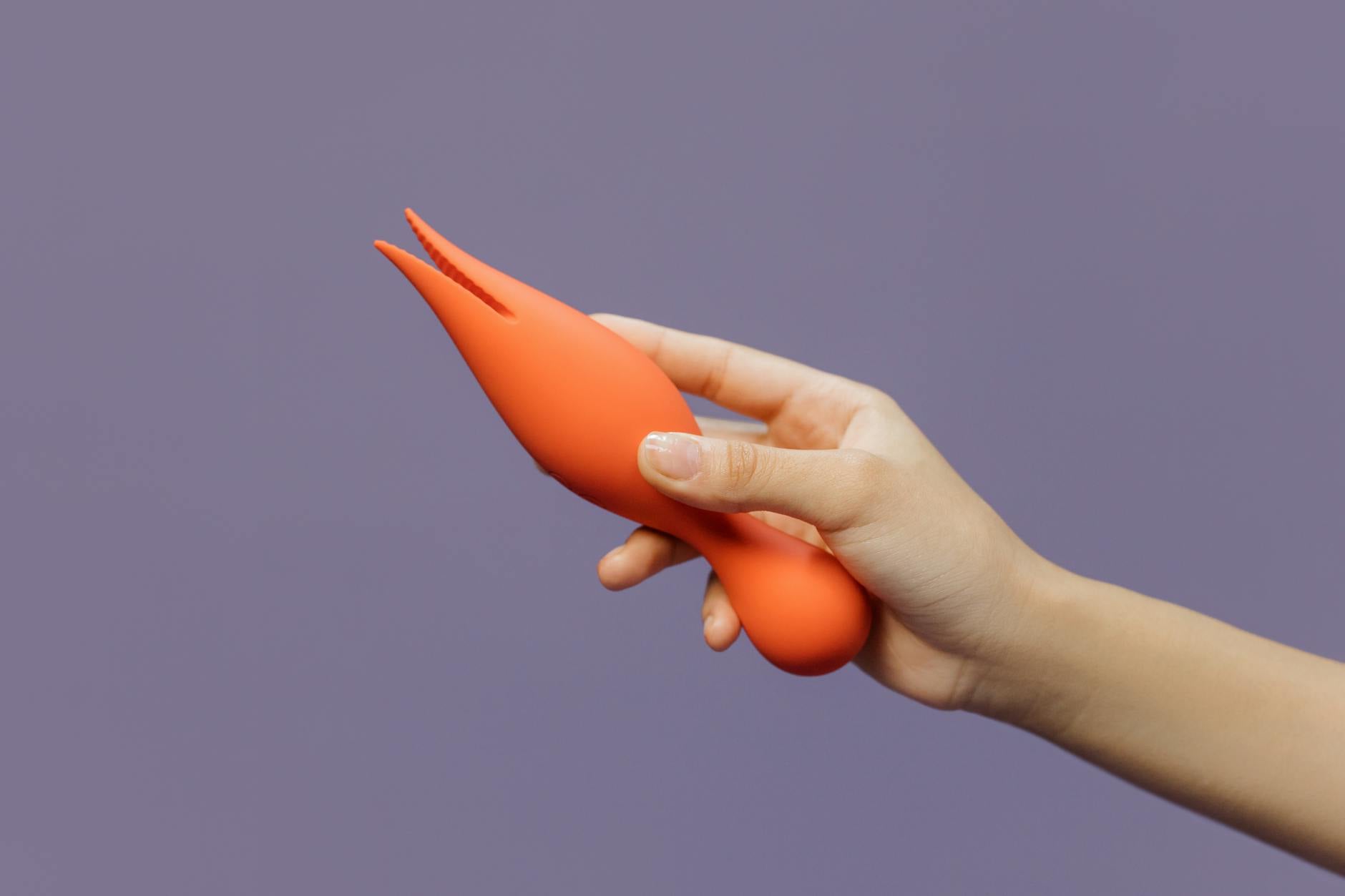
Let's be real about solo pleasure
If you're single and thinking about exploring sexual pleasure on your own, you're not filling a void. You're not "making do" until a partner comes along. You're doing something that's fundamentally yours, and that matters. Solo pleasure is how you learn what your body actually wants instead of what you think you're supposed to want.
That's especially true when you're using a lemon clitoral vibrator for the first time. These tools are designed differently than traditional vibrators. They use air-suction technology instead of pure vibration, which means the sensation is gentler, more focused, and often feels more natural. If you've tried other toys and felt nothing, or felt too much, lemon vibrators tend to split the difference in a way that's genuinely surprising.
Here's what you need to know to make that first exploration actually work.
Why solo exploration changes everything
When you're alone, the pressure lifts. There's no one to perform for, no one's timeline but yours, no wondering if you're taking too long or if the sounds you're making are weird. That mental space alone transforms the experience.
Research on sexual response shows that anxiety is one of the biggest blockers to arousal and pleasure. When you're with a partner, even a supportive one, a baseline level of self-consciousness is normal. Solo play eliminates that completely. Your brain gets to focus on sensation instead of evaluation.
There's something else too: control. You decide the pace, the pressure, the pattern, the exact rhythm. For a lot of people, especially those rebuilding confidence after bad experiences or relationship stuff, that autonomy is revelatory. You get to find out what you actually like instead of defaulting to what's always happened before.
Starting with lemon vibrators specifically
Lemon adult toys work through suction and pulsing rather than aggressive vibration. When you first use one, that might feel strange. The sensation is more localized than a traditional vibrator, and it builds differently.
Start with the lowest setting. Seriously. The Lem clitoral vibrator (Lemon Toys' most popular option) has multiple intensity levels for a reason. Most people instinctively jump to level 3 or 4 because they expect it to feel like nothing, then get surprised by the intensity and turn it back down. Start at level 1 and spend actual time there. Notice what's happening. Does it feel good? Too much? Not quite right? Adjust before you move up.
The seal matters. Make sure the toy is creating a gentle seal against your clitoris. It doesn't need to be vacuum-tight, just enough contact that the suction actually engages. If you're not feeling much, it's usually because the seal isn't quite right, not because the toy isn't working.
Use lube. Water-based lube helps the seal work better and just plain feels nicer. It also takes the pressure off your body to produce lubrication on demand, which is useful if you're nervous. Arousal is not always linear, and lube is not a sign that something's wrong. It's a tool.
Creating actual space for this in your life
You need privacy and time. Not hours. Thirty minutes. Maybe fifteen if that's all you can manage. But uninterrupted. Phone on silent, door locked, no one expecting you to be available.
The environment matters too, even if you think it shouldn't. Clean sheets help. A space that doesn't feel clinical or rushed helps. Some people light a candle or play music they actually like. This isn't about romance or performance. It's about signaling to your nervous system that this is a thing you're choosing to prioritize.
Loneliness and solo pleasure are different things. If you're using a toy because you're desperate to feel close to someone, that's a different conversation than exploring what feels good in your own body. Both are valid, but they require different headspace. When you're ready to explore for genuine pleasure, you'll know.
What to expect your first time
You might not orgasm. That's completely normal. The first time is usually about getting used to the sensation, figuring out the settings, understanding what angles work for your body. It's information gathering, not a performance.
You might also orgasm faster than you expect. Solo orgasms are often quicker than partnered ones because there's no negotiation or external distractions. That's fine too. Pleasure isn't a test with a pass grade based on duration.
Your body might do things you weren't expecting. You might shake or twitch. Your breathing might change. Sounds might come out. All of that is completely normal and actually a good sign that your nervous system is engaged.
The aftermath is sometimes weird. You might feel emotional, or sleepy, or a little strange. Your body just released a bunch of neurochemicals. Give yourself a minute before you jump up and do something else. Sit with it for a bit.
Troubleshooting the common snags
If it feels numb or dead: you're probably holding too much tension. Take five minutes to breathe. Drop your shoulders. Unclench your jaw. Sometimes our nervous system is so used to being braced that it doesn't know how to relax into pleasure. Breathwork helps.
If it feels like too much too fast: you're on too high a setting or you need more lube. Drop back to level 1. Give your body time to acclimate. Some people need several sessions before the sensation feels good instead of overwhelming.
If you're in your head the whole time: that's called spectatoring, and it happens to basically everyone on the first try. Your brain is trying to watch from the outside instead of being present. Next time, try focusing on one small thing: the pressure, the warmth, the specific spot that's being stimulated. Anchor your attention there instead of letting your mind wander to whether you're doing it right.
If you feel guilty: that's worth examining, but separately from the act itself. Solo pleasure is not selfish. It's self-awareness. Our culture sends contradictory messages about women's sexuality, and guilt often has nothing to do with what's actually happening and everything to do with old stories you've internalized. Keep going anyway. The guilt usually loosens with repetition and permission.
Building a sustainable practice
You don't need to use a lemon vibrator constantly. Some people find that regular solo play (weekly or every few days) helps them stay connected to their body and understand their arousal patterns. Others prefer occasional. There's no correct frequency.
What matters is that it's intentional rather than habit. You're choosing to explore because you want to, not because you feel like you should.
If you ever get partnered in the future and want to bring a toy into that dynamic, solo play is actually the best preparation. You already know what works for your body. You can guide a partner instead of leaving them to guess. That confidence and knowledge transfers.
Right now though, you're learning about you. That's the whole point.
Common questions about solo play with lemon toys
How often should I be using a lemon vibrator alone?
However often feels right. Some people love daily play. Others prefer weekly. There's no physiological threshold where too much becomes a problem. The only real measure is whether it's something you're choosing or something you feel obligated to do. If it stops being pleasurable and starts feeling like a chore, dial it back.
Will using a vibrator make it harder to orgasm with a partner later?
No, actually the opposite is usually true. Solo play builds body awareness and helps you understand what arousal feels like for you specifically. That knowledge makes partnered sex better, not worse. You know what you need and can communicate it.
Is it weird to use lemon adult toys if I've never had partnered sex?
Not at all. Your sexuality belongs to you regardless of whether anyone else is involved. Solo exploration is actually a really healthy way to get comfortable with pleasure before introducing another person into the equation.
What if I don't feel anything the first time I try a lemon clitoral vibrator?
First, wait a few days and try again. Your nervous system might just have needed time to acclimate. Second, try different settings and angles. Third, try more lube. If you genuinely feel nothing after a few attempts, it might be worth checking in with yourself about whether anxiety or dissociation is happening. That's normal too, and it doesn't mean something's wrong with you.
Do I need to buy a special toy designed for solo play?
No. Any good clitoral vibrator works alone or partnered. Lemon vibrators, specifically, tend to work really well for solo exploration because the sensation is easier to understand and control than traditional vibrators. But the best toy is the one that works for your body.
Is it normal to feel emotional after solo orgasm?
Completely normal. Your body releases oxytocin and other neurochemicals that can bring up feelings. You might feel happy, sad, vulnerable, or something you can't quite name. It usually passes in a few minutes. Just let it happen.
The real point
You're not exploring solo pleasure because something's missing. You're exploring it because your body is yours and it deserves attention. That's enough reason. The confidence, the pleasure, the knowledge of what works for you—those are bonuses. But the main thing is this: you're choosing yourself. That's where everything good starts.
If you want more support navigating solo pleasure or relationship dynamics around sexuality, reach out to talk through it. Your pleasure matters.