The hesitation is real, and it has a name
You might feel it as guilt. Or shame. Or just a vague sense that solo pleasure is somehow selfish, unfeminine, a betrayal of your partner, or just not something people like you are supposed to want. Between you and me, almost everyone has felt this way at some point. It's not a personal failing. It's cultural residue.
The hesitation to explore solo pleasure isn't weakness. It's the result of decades of messaging that female pleasure should be earned, partnered, or frankly, not discussed at all. When you show up to solo play carrying that weight, no vibrator is going to feel good until you understand what's actually blocking you.
Here's what I've observed in my practice: the people who struggle most with solo pleasure aren't the ones without desire. They're the ones carrying invisible permission slips they never learned to sign for themselves.
Where the hesitation actually comes from
Three sources show up repeatedly in my work with couples and individuals:
Religious or family conditioning. Growing up in households where masturbation was never named, or was named as sinful or dirty, creates a deep neural pathway. Even if your adult brain knows that's not your belief anymore, your nervous system doesn't. Your body learned: this is unsafe. That learning doesn't evaporate because you became an adult.
Relational obligation. You might have learned that your sexuality exists for someone else. Your pleasure matters only if it serves the relationship. Solo pleasure can feel like theft from your partner, or a statement that they're not enough. That belief is so common it barely seems like a belief at all. It feels like fact.
Porn shame or performance anxiety. If your earliest exposures to masturbation came from pornography, or if you're worried that solo play means you're "weird" or "too needy," that creates a chasm between curiosity and action. Add in the pressure to be silent about it (because good girls don't have vibrators), and you end up frozen.
None of these sources are your fault. But they're yours to untangle.
What changes when you use a Lemon vibrator despite the hesitation
I'm not going to pretend that picking up a lemon clitoral vibrator magically dissolves shame. It doesn't. But here's what it does:
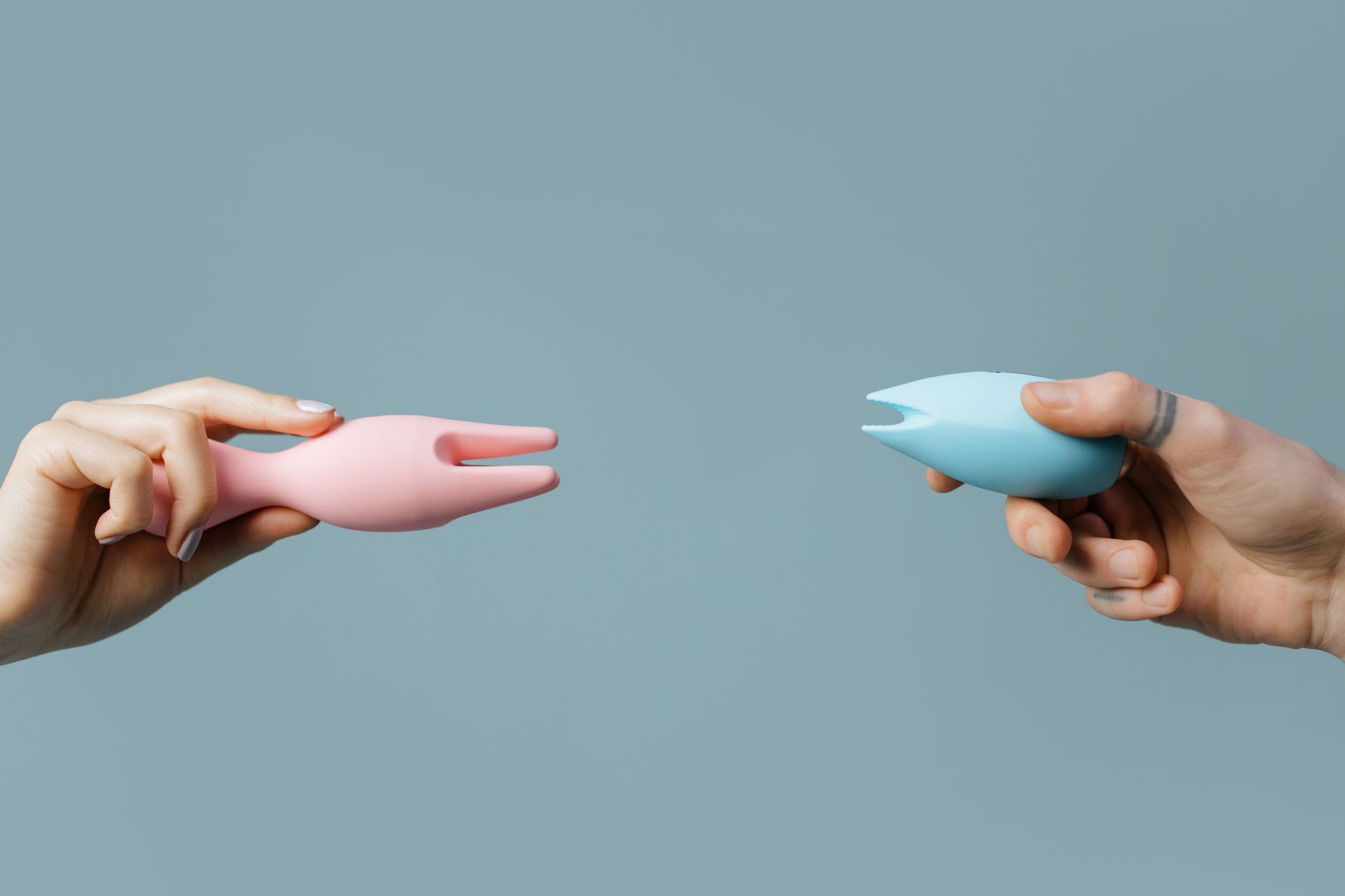
A vibrator creates a boundary between you and the guilt. Suddenly you're not using your hand. You're using a tool. That tiny shift gives your nervous system permission to explore differently. Many clients tell me that the Lem's gentle suction pattern feels less transgressive than direct friction. It doesn't feel like performance. It doesn't require technique. You just have to show up.
Using a lemon vibrator also introduces novelty in a context where novelty = permission. You're not doing what you've always done (or not done). You're doing something intentional, something you chose. That choice is the antidote to the "I'm not supposed to do this" voice.
Finally, a tool removes the pressure to perform for yourself. With your hand, you might be tempted to rush, to make it "efficient," to get it over with before the guilt catches up. A vibrator's job is to stimulate. Your job is just to be present. That split responsibility can feel radically different.
Building a solo play practice when shame is in the room
Start small. This is not the time for a 45-minute session or elaborate fantasy. This is the time for five to ten minutes of curiosity.
Set the container. Lock the door. Silence your phone. Tell your partner (if you have one) that you're taking 20 minutes alone, and they don't need to know why. The simple act of protecting your time is part of the permission-granting process.
Choose a low-stakes moment. Not right after a fight with your partner. Not when you're thinking about laundry. Pick a moment when you're genuinely curious, even if it's 3 percent curious. That tiny spark is enough.
Use lube. Water-based lube removes friction (literal and psychological). It signals: this is self-care, not punishment. It makes everything feel easier, more luxurious, less performance-oriented.
Start at the lowest setting. If you're using a Lemon clitoral vibrator like the Lem, begin at pattern one. The point isn't to chase an orgasm. The point is to notice sensation without judgment. Many people with hesitation have spent years not feeling their own bodies. This is reconnaissance, not conquest.
Don't aim for the finish line. Seriously. If an orgasm happens, great. If it doesn't, that's also fine. The goal is to spend ten minutes with yourself without shame interrupting. That's the win.
What to do when the shame voice shows up mid-session
It will. When you pause, notice it, and then keep going.
You don't have to argue with the voice or convince yourself it's wrong. You just have to not obey it. "I'm a bad person for doing this" can be true in your head while your hand stays exactly where it is. The voice gets quieter the more you ignore it.
Many of my clients find that shame softens after about three or four solo sessions. The nervous system begins to revise the threat assessment. "Oh, we did that thing three times and nothing bad happened." Repetition is what rewires this kind of deep conditioning.
The partner conversation (if you have one)
If you're in a relationship, solo play might feel risky to discuss. Here's the reframe: solo pleasure isn't about your partner. It's about you. And paradoxically, the more comfortable you are with your own body, the better your partnered sex becomes.
You don't owe your partner graphic details. You don't need their permission. But you might benefit from a simple, non-sexual conversation: "I'm going to start spending time exploring what feels good to me alone. It's not about you or us. It's about me knowing my own body better." That's it.
Partners who feel threatened by this are usually operating from the same belief system you grew up with: female sexuality should be relational, not solo. That's worth examining together, possibly with a therapist.
When hesitation masks something deeper
Sometimes the hesitation isn't shame or conditioning. Sometimes it's numbness, depression, burnout, or a sign that your relationship needs attention.
If you try solo play several times and feel genuinely nothing (not even curiosity, not even mild interest), that's worth investigating. Low desire can be physiological. It can be relational. It can be about mental health. A vibrator won't fix that, but a conversation with a therapist or doctor might illuminate what's underneath.
Similarly, if solo play feels good and orgasms arrive easily, but you feel worse afterward (deeper shame, more disconnection from your body), that's also information. You might need to work with someone on the psychological layer before the physical tool becomes helpful.
FAQ: Common questions about solo play hesitation
Is using a vibrator like the Lem cheating on my partner?
No. Solo pleasure and partnered pleasure are separate categories. One doesn't diminish the other. In fact, research consistently shows that people who are comfortable with their own bodies have better partnered sex. Your exploration is an investment in the relationship, not a betrayal of it.
Will using lemon vibrators make me less interested in partnered sex?
The opposite usually happens. When you know what your body responds to, you can actually communicate that to a partner. Solo play isn't competition. It's research.
How do I know if my hesitation is normal shame or a sign of past trauma?
Normal shame about solo pleasure usually softens after a few sessions and direct evidence that nothing bad happens. If your hesitation feels more like a panic or physical aversion, or if it connects to memories of abuse or violation, that's worth bringing to a trauma-informed therapist. A vibrator can't process trauma, but a therapist can.
What if I use a clitoral vibrator but can't orgasm?
Orgasm isn't the only marker of pleasure. Some people find that sensation, relaxation, or simple body awareness during solo play matters more than climax. If you're genuinely curious about orgasm specifically, that's a different conversation. But if orgasm pressure is what's blocking pleasure, let that go for now.
Can I use solo play to fix a sexless relationship?
No, but you can use it to clarify whether you actually want sex and pleasure, or whether the relationship itself is the issue. Sometimes low desire is a symptom of disconnection or resentment. Solo play can help you feel into that. But it's not a solution to relational problems. That requires actual conversation with your partner.
Is it normal to feel awkward the first few times using a vibrator?
Completely. You're doing something unfamiliar. Your nervous system is checking for danger. That awkwardness usually fades within a few sessions. Breathe through it. Move slowly. And remember: awkwardness is not the same as wrongness.
The permission you've been waiting for
Your pleasure belongs to you. Not to your partner. Not to a partner you don't have yet. Not to an idea of what a good woman is supposed to want. To you.
Using lemon vibrators to explore solo pleasure isn't selfish. It's not shameful. It's not weird. It's you saying: my body matters, my sensation matters, my curiosity matters, even if no one else is watching.
That's actually the bravest thing you can do. Start there.