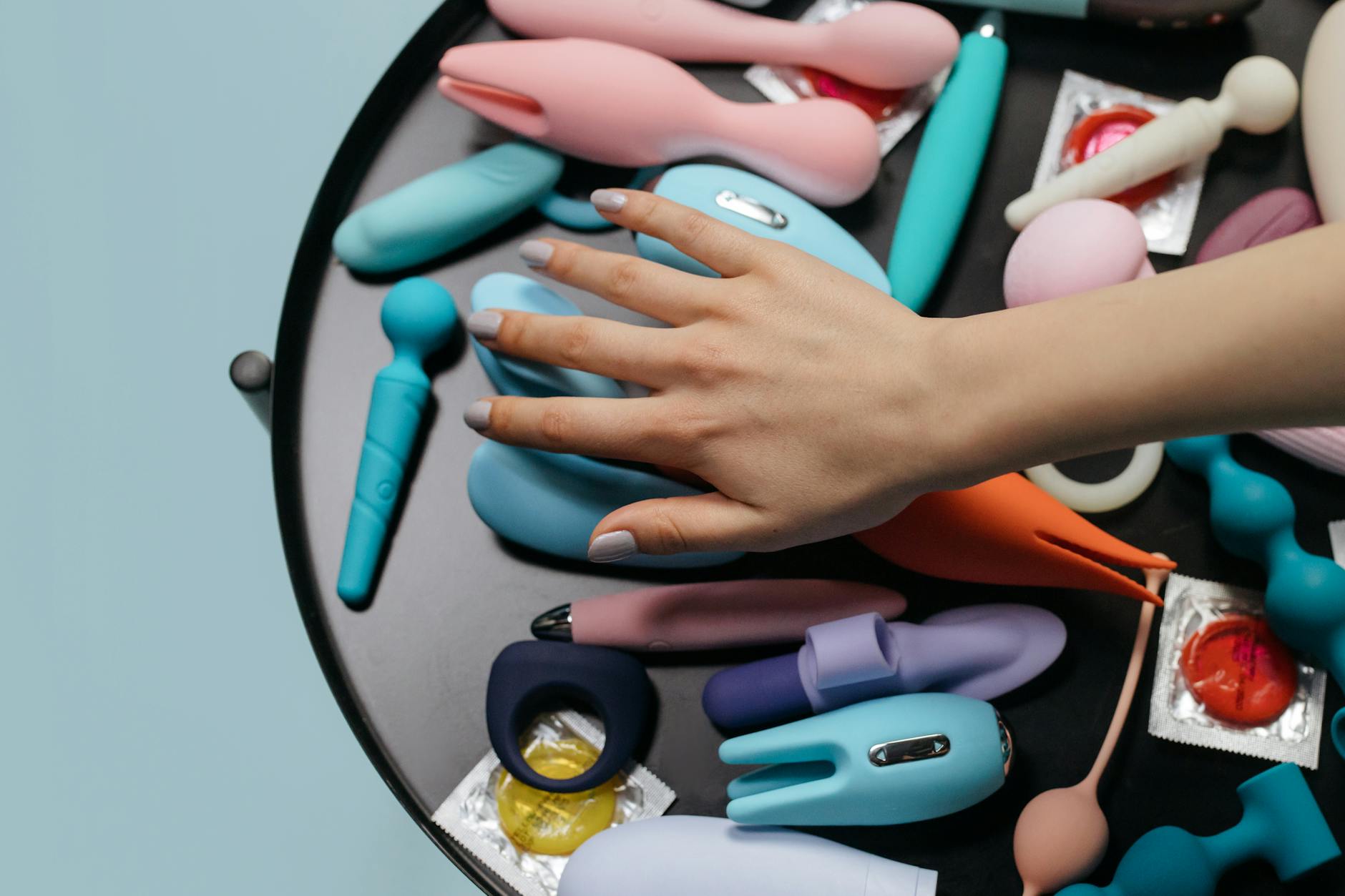
Here's the thing about performance anxiety
You're not actually having sex. You're watching yourself have sex. You're narrating it. You're grading it. You're wondering if you look okay, if you're taking long enough, if your partner is enjoying this, if you're enjoying this. Which means you're not enjoying this.
This mental state is called spectating, and it's one of the most common killers of pleasure. Not just for people with vulvas, but for everyone.
Performance pressure can come from anywhere. A new partner. A partner who's expressed (or you've imagined they've expressed) dissatisfaction. Your own internalized beliefs about what good sex should look like. Years of being told you're not orgasmic enough, responsive enough, enthusiastic enough. The pressure to orgasm on someone else's timeline, or not to take too long, or to come at exactly the right moment.
The irony is that the harder you push to perform, the further pleasure moves away.
Lemon vibrators don't fix anxiety. But they do something quieter and more powerful. They redirect your nervous system away from spectating and back into sensation.
How spectating kills sensation
Your brain has finite attention. When you're in performance mode, that attention is locked on external judgment. How you look. What your partner thinks. Whether you're doing this right. That's the opposite of where it needs to be.
Pleasure requires presence. Not pressure, not performance, not narrative. Just: this is happening in my body right now, and I'm paying attention to it.
When performance anxiety is high, the body responds by dampening arousal signals. Blood flow decreases. Lubrication slows. Sensation dulls. Your nervous system is in protective mode, not pleasure mode. This is completely involuntary. You can't will your way out of it.
A lemon clitoral vibrator works because it bypasses the spectating loop entirely. The focused, consistent sensation is so direct and so local that your brain can't stay in narrative mode. It has to join your body.
Why direct stimulation breaks the cycle
Clitoral vibrators like those from Lemon Toys don't require you to perform anything. They don't care if you're making the right face. They don't need you to look a certain way or move a certain way.
All they require is that you feel what's happening.
The clitoris has about 8,000 nerve endings. When suction or vibration hits those nerves consistently, your brain gets an unmistakable signal: something is happening here. Pay attention. Most people find that within a few minutes, the mind chatter quiets. Not because you forced it to, but because sensation is louder than anxiety.
This is physiological, not psychological. You're not thinking your way into pleasure. You're feeling your way in.
If you're working with a partner, a lemon vibrator also does something else valuable. It removes you from the center of the performance equation. Suddenly it's not about whether you're responding enough or they're doing it right. It's about whether the vibrator feels good. That's a completely different frame.
How to use lemon vibrators when performance anxiety is high
Start alone. This matters. Not because there's anything wrong with using a vibrator with a partner, but because you need to rebuild the pathway between sensation and pleasure without an audience, even a loving one.
When you're alone, start without expectations. No goal of orgasm. No timeline. Just 15 to 20 minutes of trying different patterns, different positions, different speeds. Notice what feels good without rating it or wondering if it should feel good differently.
This is called sensate focus, and it's the gold standard for breaking performance cycles. Your job is exclusively to notice sensation. Not to produce anything. Not to achieve anything.
When you're ready to use a lemon vibrator with a partner, bring it in without fanfare. "I want to try this. Not instead of what we do, just sometimes." You don't owe anyone a performance arc about why. You don't need to explain it as a fix for something broken.
Many people find that having a vibrator present actually reduces pressure because suddenly the focus is on sensation, not on whether your partner is doing the right thing or whether you're responding the right way.
What changes when you're not spectating
When your attention is in your body instead of watching your body, everything shifts. Arousal builds faster. Orgasms feel different, often more intense. But more importantly, sex starts to feel like something you experience rather than something you perform.
This is the pivot point where pleasure becomes possible again.
For some people, that shift happens in a single session. For others, it takes a few weeks of consistent attention. Both are normal. You've probably spent years in performance mode. Your nervous system needs time to remember that it's safe to just feel.
If you have a partner, the other thing that changes is emotional safety. When they see you able to focus on sensation without anxiety, when they're not bearing the weight of "making" you feel good, the whole interaction becomes more intimate. Less transaction. More connection.
When to add a partner back in
Once you can get into sensation mode consistently alone, bringing a partner back in usually works better. But the rules are different now. You're not performing for them. You're inviting them to be present while you feel something. That's a completely different energy.
Many people find that using lemon vibrators to deepen connection with your partner actually makes partnered sex more intimate because the focus is on shared sensation, not on scoring points or hitting marks.
The role of communication
If performance anxiety is tied to a specific partner dynamic, you'll eventually need to talk about it. But here's what doesn't work: waiting until sex to bring it up, or framing it as a problem with your body.
"I've noticed I'm in my head during sex" is different from "I can't come fast enough" or "You need to do this differently." The first is about your internal experience. The second sounds like blame.
Same conversation, totally different outcome.
Your partner probably doesn't want you performing either. They want you present. Saying that out loud is vulnerable, but it usually creates space for both of you to drop the act.
Why lemon vibrators specifically help here
All vibrators aren't the same. A lemon clitoral vibrator is designed to focus sensation in a way that keeps your attention locked into your body. The suction mechanism, the consistent pattern, the directness of it. There's not much room for your brain to wander.
With a less focused vibrator, it's easier to stay in your head. With something designed around clitoral sensation, the feedback is so clear that spectating becomes nearly impossible.
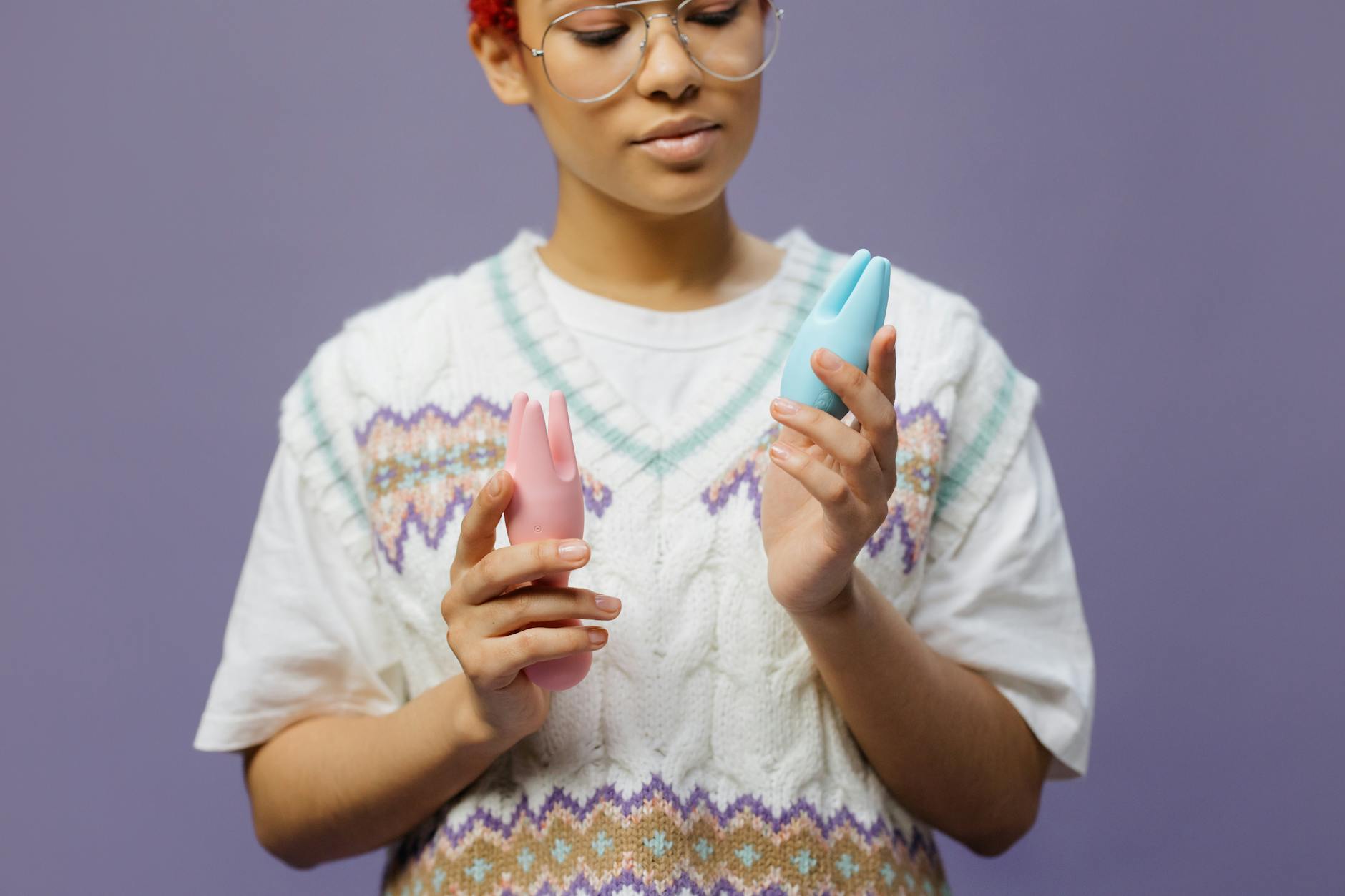
Photo by cottonbro studio on Pexels
The longer arc
Performance anxiety doesn't vanish overnight. But when you practice feeling instead of performing, your nervous system learns that sensation is safe. Orgasms aren't the goal you're grinding toward. They're what happens when you actually let yourself feel.
Everything changes when you stop narrating and start experiencing. A lemon vibrator is just a tool to make that easier.
FAQ: Performance anxiety and pleasure
Can performance anxiety actually prevent orgasm?
Yes. When your nervous system is in protective mode because of anxiety, it dampens arousal signals. Blood flow decreases, sensation dulls, and your body literally can't produce an orgasm response. This is involuntary. You can't think your way out of it. You have to feel your way out of it, which is where sensation-focused tools like lemon vibrators help.
Should I tell my partner I'm using a vibrator because of anxiety?
You don't owe anyone a performance confession. You can simply say, "I want to explore this" or "This feels good to me." But if performance pressure is coming specifically from that partner, then yes, having a conversation about the anxiety itself is important. Not during sex. During a calm moment when you can say, "I get in my head during sex. I'm working on that."
How long does it take to stop spectating?
This varies widely. Some people feel the shift within days. Others need weeks or months of consistent solo practice. The key is not to spectate about your spectating. Just notice when you're in your head, gently bring your attention back to sensation, and keep going. No judgment.
Can I use a lemon vibrator if I'm having partnered sex but feeling anxious?
Yes, absolutely. Many people find that introducing a vibrator actually reduces anxiety because the focus shifts to sensation rather than performance. It also removes the pressure on your partner to "do" something that feels good. The vibrator is doing that part.
What if I feel even more self-conscious using a vibrator with a partner?
That's worth exploring separately. Self-consciousness during sex usually points to shame or learned beliefs about what's acceptable. A good starting point is to use the vibrator alone for a few weeks until it feels normal and safe. Then introduce it when you feel grounded in the experience rather than vulnerable about it.
Is performance anxiety different from not wanting sex at all?
Yes. Performance anxiety usually means you want sex but you're getting in your own way. Loss of desire is different. If you're exploring how sensations feel when you're starting fresh after time away from sex, this post on returning to pleasure after abstinence might help you figure out what's actually happening.
The real breakthrough
Performance anxiety is the story you tell about sex. The solution is to stop telling a story and start having a body.
Lemon vibrators make that easier. Not because they're magic, but because they're so direct that your brain has to follow your body's signals instead of your mind's script. That's when everything shifts.