The disconnect nobody talks about
You want to have sex. You're genuinely turned on. But when it comes time to actually feel something, the signals get fuzzy. Your desire is firing on all cylinders. Your clitoris is... muted.
This is weirdly common and almost never discussed, probably because it sounds contradictory. How can you be horny and numb at the same time? The answer is simple once you know it: arousal and sensation are two separate pathways in the nervous system, and they don't always travel at the same speed.
Why your libido and sensation aren't matched
Mental arousal lives in your brain. Genital sensation lives in your nerve endings. One can absolutely outpace the other.
This happens for a bunch of reasons. Stress that's chronic but not acute will kill sensation while leaving desire intact. Some medications (SSRIs, certain antihistamines, hormonal contraceptives) suppress sensation more than they suppress desire. Age, alcohol, and even repetitive friction from the same toy or partner can gradually desensitize the clitoral nerves while your psyche stays hungry.
There's also a phenomenon that happens in longer relationships. The novelty is gone, so your brain isn't flooding you with dopamine and adrenaline. But your body still craves touch. The mental arousal settles into something quieter and more stable, while sensation... just doesn't show up the way it used to.
What makes this frustrating is that it feels personal. Like your body is broken, or you've lost something. You haven't. You've just hit a mismatch between two different systems, and mismatches have solutions.
How lemon vibrators solve the sensation gap
Traditional vibrators work by frequency. They buzz fast enough to stimulate nerves through repetition. If your sensation is already muted, a vibrator just becomes a smaller buzz against smaller feeling. You're still waiting for sensation that might not match your desire.
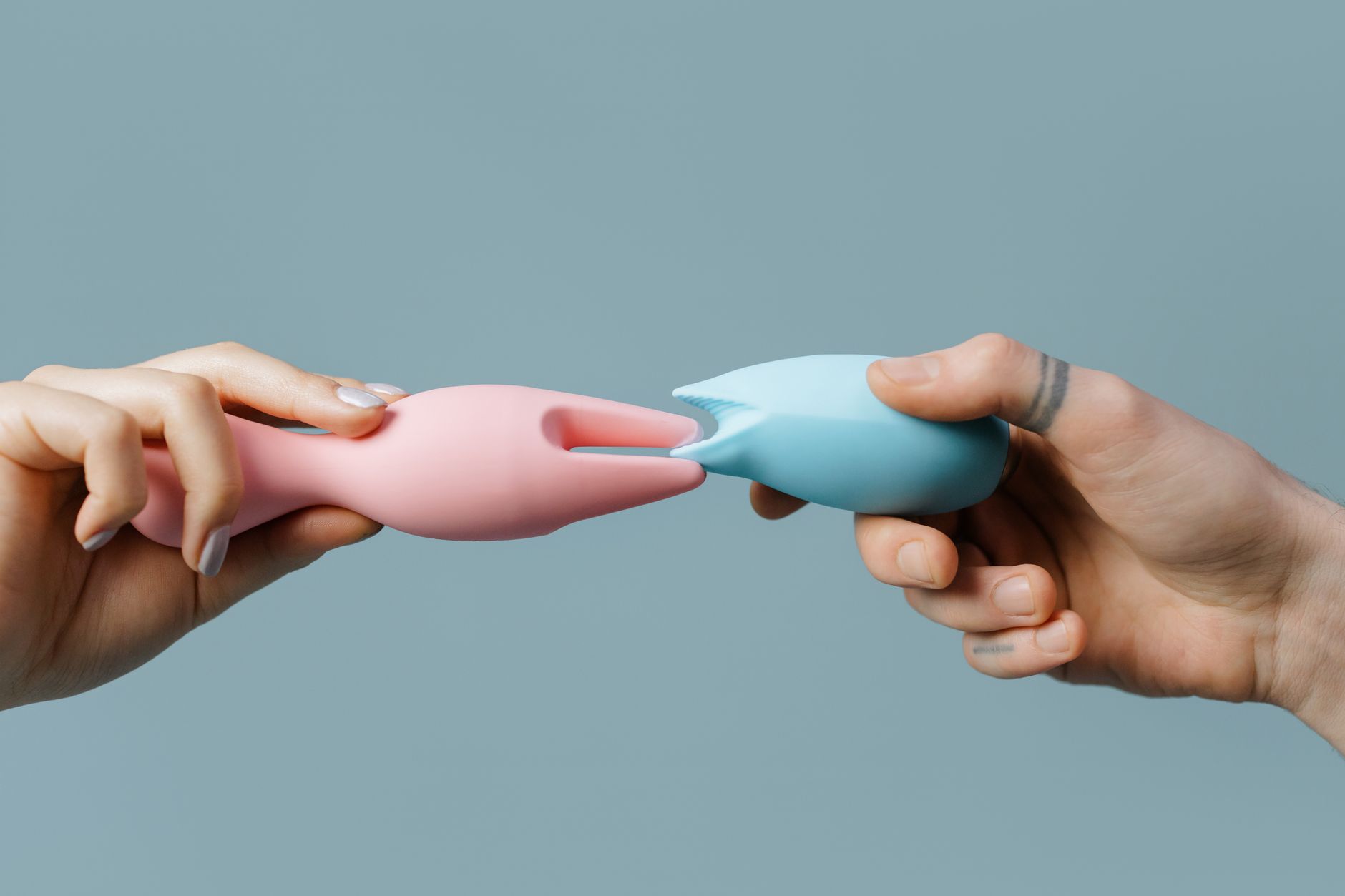
Lemon clitoral vibrators work differently. The suction technology in models like the Lem doesn't rely only on frequency. It creates sustained pressure and release cycles that stimulate the entire clitoral structure, not just the surface. That matters because the clitoris is much larger than the visible part. It's got internal branches, and suction reaches all of them.
When sensation is low, suction gives your nerves something bigger to work with. You're not asking for more feeling through more vibration. You're asking for a different kind of stimulation that activates a wider nerve network.
That's why people with numb or muted sensation often feel the Lem or similar suction toys before they feel anything from traditional vibrators. The technology isn't trying to compensate for weak sensation. It's rerouting around it.
The practical setup that actually works
Start with lowest intensity. The impulse is to crank it up because you're frustrated that you can't feel much. Don't. That usually just desensitizes things further. Lowest intensity on the Lem (pattern 1 or 2) is still more stimulation than most vibrators offer at full power, just organized differently.
Warm up longer than you think you need. Your clitoris is literally a muscle and nerve cluster. It needs blood flow. Spend ten to fifteen minutes on mental arousal, partnered touch, or whatever gets your brain engaged. Let your body catch up. Then introduce the toy.
Place it carefully, not urgently. You're looking for the sensation, so you need to be present for it. Direct suction on the clitoral hood usually works better than direct contact with the glans (the tip), especially if sensation is already low. The hood is more resilient and the sensation pattern is gentler but still clear.
Stay there. Don't chase sensation by moving the toy around. Let your nerves recognize what's happening. Often the sensation "wakes up" after a minute or two of steady contact. Your body learns what to expect and starts responding.

Photo by Anna Shvets on Pexels
When partnered sex enters the picture
If you have a partner, the mismatch between your high libido and low sensation creates a specific kind of tension. They feel your desire and want to meet it. But the sensation gap means penetration or external touch might feel less intense to you than it does to them. This is where clarity saves relationships.
Tell them: "I want you. I'm genuinely turned on. I just need different stimulation to feel it as intensely as I'm experiencing it mentally." That's not a rejection. It's information. Most partners are relieved to have something concrete to work with instead of guessing whether you're enjoying it.
Many couples use a lemon sucker or similar toy as foreplay before partnered sex. You get your sensation up, your nerves fire up, and then you're genuinely present for the rest. You're not fighting to feel something that isn't matching your desire.
Alternatively, some people use the toy during partnered sex. It sounds like it should be awkward. In practice, it's not. Your partner can watch your face and body respond in real time. They get to see the moment your sensation catches up to your desire. That's actually profoundly connecting for a lot of couples.
The psychological piece that changes everything
High libido with low sensation breeds a specific shame. You feel broken. Like something in you is disconnected. Then you start questioning whether you're actually attracted to your partner, or whether something is fundamentally wrong with you.
It's not. You're just experiencing two different nervous system responses at different speeds. That's annoying and frustrating, but it's not shameful or indicative of a larger problem.
Once you stop fighting the mismatch and start working with it, things shift. You use a tool like a lemon clitoral vibrator that bridges the gap. Your sensation catches up. You're present. You're not spending the whole experience waiting for your body to match your mind.
A lot of people report that once they've solved the sensation gap a few times, their body starts responding faster on its own. It learns the pattern. Your nervous system gets the memo that yes, this is happening, and sensation catches up more quickly. The gap gets smaller just through repetition and relief.
Common questions while you're adjusting
Should I use the toy every time? No. But you can. Some people use it until sensation naturally catches up, then move on to partnered touch. Others prefer it as part of the whole experience. Neither is wrong. You're figuring out what your nervous system responds to.
Will using a suction toy make me unable to feel traditional vibrators? Not at all. You're not retraining your nerves to only respond to suction. You're giving them a tool that actually works while you're dealing with the sensation gap. Those are different things.
Does the sensation gap mean I have a broken libido? Completely the opposite. You have a libido that's working. You just have sensation that's lagging. Treating them separately instead of assuming they're one problem changes everything about how you approach it.
Will my partner get jealous if I use a toy? Maybe, if you frame it as "I need this instead of you." If you frame it as "I need this to feel my own desire more fully, and then I can be more present with you," it usually lands differently. Most partners want you present and feeling good more than they want to be the only source of stimulation.
Moving forward without frustration
High libido with low sensation is fixable. It's not a sign of dysfunction or incompatibility or a broken body. It's a timing mismatch between two normal nervous system responses, and it has solutions.
Lemon clitoral vibrators work for this because they don't try to compensate for weak sensation through stronger vibration. They offer a different kind of stimulation that tends to activate sensation more reliably when the traditional approach isn't working.
Give yourself permission to use what works. Your desire matters. Your sensation matters. Getting them to sync up is a reasonable goal, and the tools exist to make it happen. If you're frustrated or things aren't shifting after consistent practice, reaching out to a therapist or sex educator can help clarify what's underneath the gap. But most of the time, it's just a tool and a little patience away from resolving.
FAQ
What's the difference between low sensation and numbness?
Low sensation means you can feel some stimulation but it's muted or requires more intensity than it used to. Numbness is complete absence of feeling. If you're experiencing actual numbness rather than just low sensation, that's worth discussing with a doctor, especially if it started suddenly. For the sensation gap described here, we're talking about reduced feeling while arousal is still present and strong.
Can anxiety about not feeling anything make the sensation gap worse?
Absolutely. The harder you focus on waiting for sensation, the less likely you are to notice it. Performance anxiety and sensation anxiety create a feedback loop. Using a tool like a lemon vibrator can break that loop because it gives you something concrete and often more reliably stimulating to focus on instead of the absence of sensation.
Is it normal for sensation to vary from day to day?
Completely normal. Stress, sleep, hydration, where you are in your cycle, and what you ate all affect sensation. If sensation is consistently low over weeks or months, that's when to investigate deeper. Day-to-day variation is just your body being human.
Should I talk to my doctor about the sensation gap?
If sensation has changed suddenly or dramatically, yes. If it's been gradual and you're managing it with tools that work, not necessarily. If you're concerned about underlying conditions like neuropathy or hormonal changes, that's a conversation worth having. But a lot of sensation gaps are situational and fixable without medical intervention.
Will using lemon vibrators make me dependent on them?
No. You might prefer them to other toys because they actually work for your nervous system, but that's not dependence. That's just recognizing a tool that serves you well. Some people use them every time. Others use them occasionally and rely on partnered touch or other stimulation the rest of the time. Both are totally fine.
How long does it usually take for sensation to catch up to arousal?
It varies. Sometimes ten minutes. Sometimes a few weeks of consistent practice. The first time is often the longest because your body is learning the pattern. After that, many people find the gap closes faster. Stress and hormonal changes can stretch it out. But generally, if you're regularly using something that works, you'll notice the sync getting better within a month.
If you're navigating this in a relationship and need support beyond the practical side, talking with a therapist who specializes in sexuality and intimacy can help both of you work through the emotional components. Reach out anytime you want to troubleshoot further.