Here's the thing about solo pleasure
It's not a warmup. It's not practice. It's not something you do because partnered sex isn't available. Solo play is its own category entirely, with its own rhythm, its own permission structure, and honestly, its own potential for depth that many people never discover.
The catch: most of us learned to have sex in the presence of someone else. That changes everything. Even when you're alone, the scripts you internalized about what pleasure should look like, how long it should take, and what counts as success are still running in the background. You're not really alone. You're alone with an audience in your head.
That's where lemon vibrators shift the game. They're tools designed for efficiency and sensation without the mental load. But more importantly, they give you permission to stop performing, even to yourself.
Why performance anxiety creeps into solo play
I work with a lot of people who describe their solo sessions as rushed, goal-focused, and weirdly unsatisfying despite reaching climax. They're thinking: "How long is this taking? Am I doing this right? Will my partner wonder where I am?" Even alone, the pressure is real.
This happens because pleasure isn't purely physical. Your brain is part of the apparatus. And your brain has been trained, for years or decades, to prioritize other people's comfort and schedules over your own sensation. Solo time can feel stolen rather than owned. It can feel like you need to hurry up and finish before someone needs you.
Add the cultural baggage most people carry about masturbation, and you've got a situation where the thing you're doing for yourself is still somehow not quite for you.
What changes when you shift into true solo mode
Three things happen when you deliberately create space for solo pleasure as its own valid experience:
1. You stop tracking time. Pressure to finish evaporates. You move at the pace that actually builds sensation, not the pace that fits your schedule.
2. You explore edges instead of chasing endpoints. Without someone else's arousal or comfort to consider, you can spend 20 minutes on sensations that feel interesting but not intense. You can stay in the build. You can go backward and restart. You can stop entirely and sit with what you learned.
3. You notice what actually works for your body. When you're not performing, you start to see patterns. You realize that pattern 4 on the Lem feels better than pattern 8. You discover that starting at the base of your clitoris instead of the tip changes everything. You learn yourself.
Lemon sexual toys, especially the clitoral vibrators, let you explore these edges without the pressure of proving anything. The suction sensation feels distinct and unfamiliar enough that it breaks you out of autopilot. You can't phone it in. That's the whole point.
Setting up solo sessions that actually feel spacious
Let's be practical. Here's how to create the conditions where performance pressure actually dissolves:
Make time a non-factor. Block it. Tell your household you're unavailable for the next hour. Put your phone in another room. If you know you have exactly 15 minutes before someone gets home, that time is poisoned. You'll spend it anxious. Solo play works best when the boundary is real.
Start with a lemon clitoral vibrator at low intensity. The Lem, for instance, has multiple patterns and speeds. Begin at level 1. There's no prize for reaching level 8 quickly. Let your body signal when it's ready to shift. This is your clock now, not anyone else's.
Approach sensation like you're mapping new territory. You're not supposed to already know what works. That's the freedom of solo play. Try the vibrator in slightly different positions. Notice what changes. There's no "wrong" here.
Let the experience be nonlinear. You don't have to build toward anything. You can pleasure yourself, cool down, rest, and start again 10 minutes later. You can have a session that peaks once or multiple times or not at all and still be meaningful. The goal is presence, not achievement.
How lemon adult toys specifically help with this
Lemon vibrators have a particular design philosophy that works really well when you're trying to dissolve performance pressure. The suction-based sensation is novel enough that your brain can't drift into autopilot. You have to stay present with what's happening.
They're also genuinely quiet, which means you can relax into the physical pleasure without the mental load of "is anyone hearing this." That quiet alone changes the texture of the experience.
Beyond that, the control is entirely yours. Multiple intensities, multiple patterns. You're adjusting the stimulation in real time based on what your body is asking for, not based on what you think you should want. That's the entire point of reclaiming solo pleasure from performance pressure.
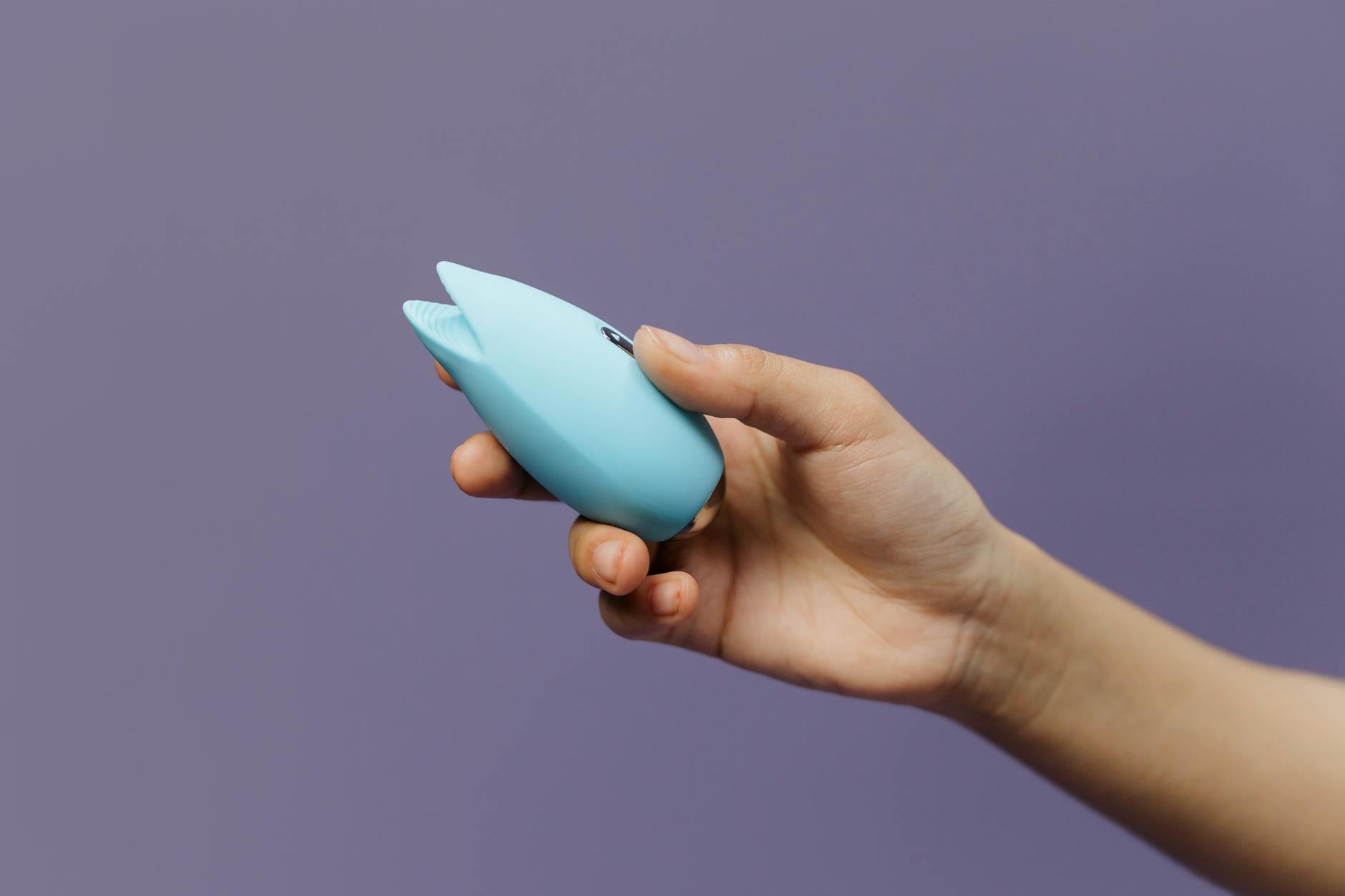
Photo by cottonbro studio on Pexels
The mental shift that actually matters
Here's what I see change most consistently when people deliberately give themselves permission to have solo pleasure as a valued experience rather than something to rush through: they stop apologizing for it. First to themselves, then to the world.
This might sound peripheral, but it's foundational. If you're mentally apologizing while you're touching yourself, you're still performing. You're still convincing an internal audience that this is okay. That voice is exhausting and it dampens sensation.
Solo play without performance pressure means deciding that your pleasure is real, that it matters, that it deserves your full attention and a block of actual time. Not stolen minutes. Not rushed sessions. Real time.
Once you make that decision, the tool you choose starts to matter differently. It's not a hack to speed things up. It's an instrument for exploration. The Lem or any lemon clitoral vibrator becomes an extension of what you're trying to learn about your own body.
Building the habit
Start weekly if you can. Consistency trains your nervous system to relax into these sessions faster. Your body learns: this is safe time, this is for me, this is not a performance.
If you're used to solo sessions feeling rushed or goal-oriented, the first few times at a slower pace might actually feel strange. That's normal. You're rewiring. Give it four or five sessions before you evaluate whether this new rhythm works.
Track what you notice. Not in a clinical way, but maybe in a note on your phone: which patterns felt best, what time of day you prefer, how your body responded differently when you had an hour versus 20 minutes. This data is for you, no one else. It's the opposite of performance. It's self-knowledge.
When to connect solo pleasure back to partnered sex
Here's a nuance: solo exploration doesn't have to be separate from partnered dynamics. In fact, the clarity you develop about your own body and what brings you sensation often makes partnered sex better. You know what you like. You can ask for it. You're not performing your partner's idea of what you should want.
Some people find that solo sessions help them release pressure in their partnered life. They're not bringing all their orgasm expectations into the bedroom. The pressure has been contained and resolved elsewhere.
Others find that eventually they want to share what they've learned. "I discovered that this particular pattern feels incredible, want to try it together?" That's collaboration, not performance.
The key is that solo play remains your own. It's the one space where the only audience is you. Lemon sexual toys give you the tool. Your job is to give yourself the permission.
FAQ
How often should I have solo sessions to feel the benefits of reduced performance pressure?
Once weekly is a solid starting point for most people. Your nervous system learns that this is a reliable, safe space for your own pleasure. Frequency matters less than consistency. Three intentional solo sessions monthly beats daily rushed sessions. The quality of presence is what actually shifts the pressure dynamic.
Can using a lemon vibrator for solo pleasure change how I experience partnered sex?
Often, yes. When you know your body better and you've given yourself permission to prioritize your own sensation, that confidence carries into partnered dynamics. You tend to ask for what you want more clearly. You're less focused on performing and more focused on connection. Some people find their pleasure deepens. Others find they actually have more freedom to say no when they don't want sex, because they're not anxious about missing out on sensation.
What if I feel guilty about taking time for solo pleasure?
That guilt is cultural residue, not truth. Your pleasure is not selfish. It's not taking from anyone. It's actually foundational to your health and your relationship satisfaction. If you have a partner, solo play isn't competing with partnered sex. It's a different thing. Both exist. The guilt usually fades once you've given yourself permission to experience a few sessions without an internal audience criticizing you. If the guilt persists, that might be worth exploring separately, maybe with a therapist or counselor.
Should I tell my partner about my solo play with lemon adult toys?
That's your call entirely. Some couples benefit from transparency and even shared interest. Others find solo exploration is a private thing that doesn't need to be discussed. There's no universal right answer. The framework is simple: solo pleasure is yours. You get to decide who knows about it and how much detail matters.
How do I know if I'm using a clitoral vibrator correctly for solo play?
There's no "correct" way. If it feels good and you're not in pain, you're doing it right. Some people like direct contact. Others prefer indirect stimulation against the mons or inner thigh. Some find their rhythm by moving the vibrator. Others stay still and let the sensation build. Try different approaches across a few sessions and notice what draws you in most. That's your answer.
Can solo pleasure with lemon vibrators help if I've been avoiding my body or feeling disconnected from sensation?
Absolutely. Solo play is often how people reconnect with sensation after trauma, after medical events, or after long periods of ignoring their body. The novelty of a clitoral vibrator can actually help because it's distinct enough to break through numbness or avoidance. Start at the lowest intensity. Let your nervous system adjust slowly. This isn't about reaching climax. It's about gradually remembering that sensation is available to you.
Your pleasure deserves better than performance
Solo play is the one arena where you get to make every decision. The pace, the timing, the intensity, what happens next. You don't have to negotiate or consider someone else's experience or comfort. That freedom is profound, and it's worth protecting.
When you use that time not to rush toward an endpoint but to genuinely explore what your body wants, something shifts. You stop performing pleasure and you start experiencing it.
Lemon clitoral vibrators are efficient tools designed exactly for that. They're quiet, controllable, and undistracting enough that you can stay present with sensation instead of getting lost in mechanics. But the tool is secondary. The real instrument is your own permission.
If you're ready to reclaim solo play as something valuable and unhurried, we're here to support that. Reach out if you want to talk about what might work best for you.