
How to Use Lemon Vibrators When Your Orgasms Feel Inconsistent or Unreliable
Let me be direct: inconsistent orgasms aren't a pleasure problem. They're a nervous system problem.
Your orgasm isn't like flipping a light switch. It's more like tuning a radio. Sometimes you land on the frequency immediately. Sometimes you're scanning past static for five minutes. And sometimes, no matter how much you fiddle with the dial, the signal won't lock. That randomness isn't a flaw in you. It's how your autonomic nervous system works under different conditions.
Here's what I see in my practice: people with unreliable orgasms often think the issue is physical (not enough stimulation, wrong angle, body's broken) or psychological (not turned on enough, too much in their head, not attracted anymore). Sometimes it's one of those things. Usually, it's both at once, layered over stress, sleep, hormones, and whether you're grinding your teeth over that email from this morning.
The good news is that inconsistency is actually a sign your system is working. You're not numb. You're responsive. You're just responsive to conditions. And once you understand the conditions, you can engineer them.
Why orgasms get unreliable in the first place
Your orgasm depends on two nervous system states running in parallel: arousal (your sympathetic nervous system waking up) and relaxation (your parasympathetic nervous system staying calm). You need both. Most people think they need to turn arousal up to maximum. Actually, you need arousal up and pressure down.
When you're stressed, sleep-deprived, or distracted, your sympathetic nervous system is already partially activated. It's like showing up to a party where the volume is already halfway up. Any additional stimulus can feel like too much, or it can feel like nothing. Your system can't find the middle ground.
Hormonal shifts also matter. If you're mid-cycle (higher estrogen, higher dopamine), orgasms often come faster and feel more intense. If you're in the luteal phase (lower estrogen, lower dopamine), they take longer and feel more subtle. This isn't intuition. This is neuroscience. Most people never connect these dots because we don't track them.
Medications, alcohol, caffeine, and even how much water you've had that day shift the window. Anxiety, relationship tension, and body image concerns narrow it further.
The pattern nobody talks about: success breeds anxiety, anxiety kills reliability
Here's the trap: you have a really good orgasm, and then you want it to happen the same way next time. So you recreate the exact conditions, exact position, exact timing. But the moment you're thinking about achieving the same result, you've moved out of arousal and into performance. Your nervous system can feel that shift. It responds by shutting down.
Inconvenient but real: the harder you try to make your orgasm reliable, the less reliable it becomes.
I see this especially in partnered sex. One partner figures out a technique that works, and then they do it the same way every time. Both partners get locked into the script. And because the script is now about performance, not presence, the orgasm either vanishes or becomes conditional on hitting every exact note.
The nervous system hates scripts. It loves novelty and safety at the same time, which sounds contradictory but isn't.
How clitoral vibrators actually solve this
Here's where lemon vibrators, especially suction-style tools like the Lem, change the equation.
A good clitoral vibrator does three things at once:
1. It removes the performance pressure. You're not relying on your partner's hand or your own strength. You're not performing the role of someone having an orgasm. The tool does the consistent work. You get to just receive it. Your brain can finally relax out of performance mode.
2. It gives you a consistent baseline stimulus without requiring thought. Your system isn't working to generate the sensation. It's processing a sensation that's already there. This frees up mental bandwidth. You can actually be present instead of checking in every two seconds about whether it's happening yet.
3. It works through the nervous system's variation windows. Even on days when your system is dysregulated or conditions aren't perfect, a lemon clitoral vibrator can still get you there because it's providing stimulus that's independent of your arousal level. You don't have to be at 100 percent mentally ready. You just have to be available.
Suction vibrators in particular bypass a common barrier: they don't require the direct friction that can feel overwhelming or numb depending on the day. The sensation is different, often steadier and more reliably pleasurable across different physical and emotional states.
Building a reliable system
Consistency isn't about willpower. It's about engineering your environment and your ritual.
First: time of day matters more than you think. Many people are most responsive in the morning or early evening, when their nervous system hasn't been battered by the day. Try the same lemon vibrator at different times and notice the difference. Don't assume the difference means it's broken. It means you're human.
Second: stress management is foreplay. A 10-minute walk, five minutes of breathing, even just putting your phone in another room signals to your nervous system that this is safe time. Your orgasm will follow.
Third: novelty in context. Use your lemon clitoral vibrator, but vary where you use it, what you're thinking about, whether you're alone or with a partner, what music or sound is playing. The tool stays consistent. Everything else shifts. This keeps your nervous system engaged without spiraling into performance anxiety.
Fourth: track without obsessing. Note the conditions under which your orgasms are reliable. Good sleep, earlier in the cycle, after exercise, with a partner you feel safe with, alone with no time pressure. These aren't rules. They're data. You're learning your own system.
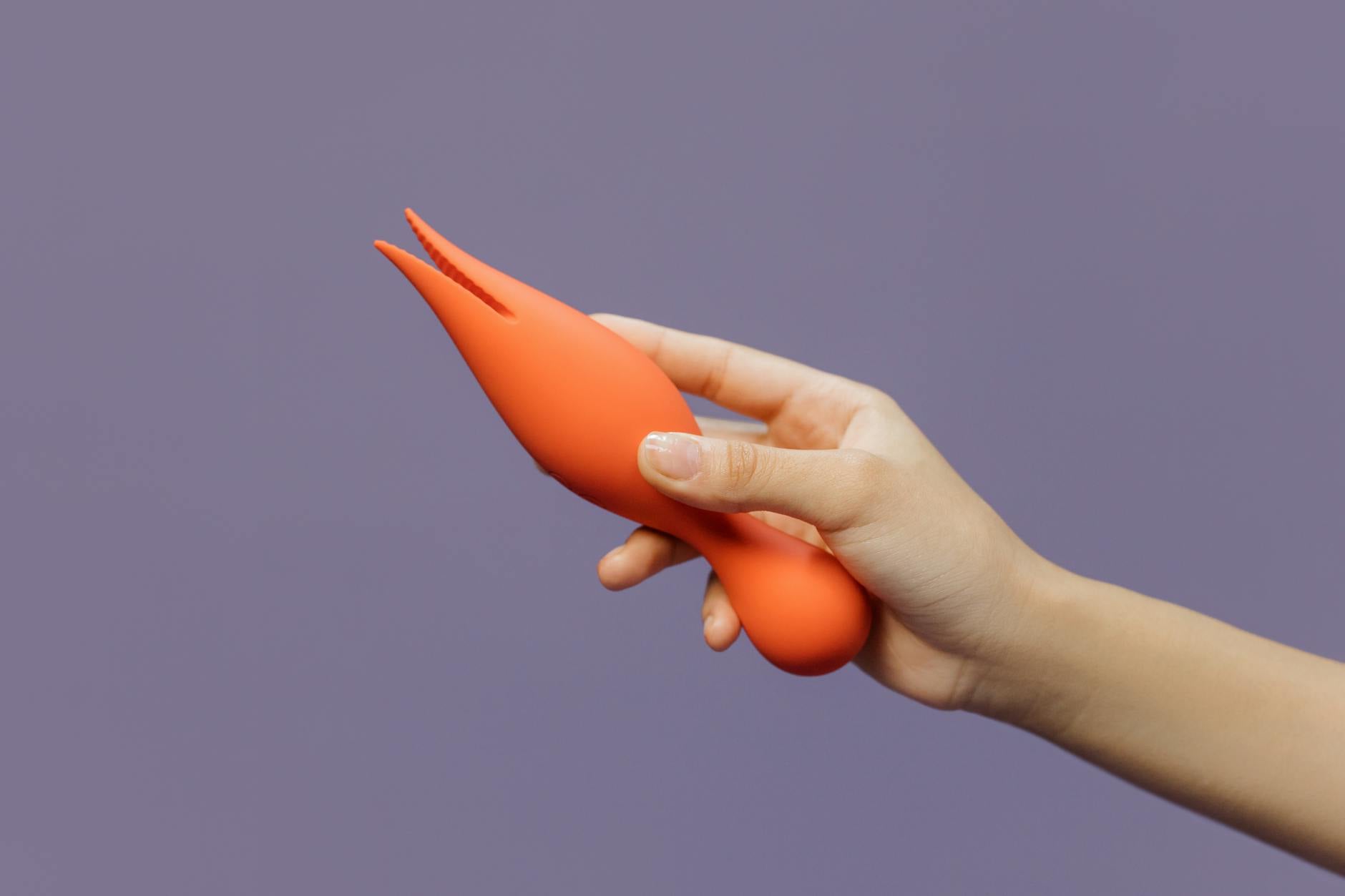
Photo by cottonbro studio on Pexels
The role of communication (if there's a partner involved)
If you're with a partner, don't position the vibrator as your problem or their failure. Position it as information. "My nervous system is finicky and I want to understand why. This helps me feel what my body is capable of. It also tells us what conditions help me get there."
The most reliable orgasms I see in partnered situations happen when both people have given up on predictability and focused on presence. You're not trying to hit a target. You're exploring together. The vibrator isn't a hack. It's a communication tool. It shows your partner exactly what feels good and when.
Many partners feel relieved when a vibrator enters the picture because suddenly the pressure is off them to be the sole source of your pleasure. Ironically, that relaxation often leads to better partnered sex, not worse.
When inconsistency signals something else
If your orgasms were reliable and suddenly became unreliable, that's worth investigating. New medications, hormonal shifts, relationship stress, unprocessed trauma, depression, or anxiety can all cause this shift. A vibrator will help you manage it, but it might not be the full answer.
If you're experiencing pain alongside the inconsistency, see a pelvic floor specialist. If it coincides with major life stress, a therapist might be the right first step. Your vibrator is a tool for pleasure, not a diagnostic device.
But if inconsistency has always been your baseline, you don't need fixing. You need tools that work with your system instead of against it. Lemon clitoral vibrators do that.
Building confidence through evidence
Here's what happens when you use the right tool consistently: you stop waiting for your body to cooperate and start trusting that it will. That shift from distrust to trust is everything.
After two weeks of regular use with a lemon sucker or other lemon vibrator, most people report that their orgasms feel more reliable not just with the toy, but solo and partnered without it. Why? Because your nervous system has data now. It knows it's capable. The anxiety dissolves.
Your inconsistent orgasms aren't a character flaw. They're feedback. Once you decode the feedback, pleasure becomes something you can actually count on.
People also ask
Why do my orgasms work with a vibrator but not without one?
Vibrators provide consistent external stimulus that doesn't depend on your mental state, arousal level, or physical coordination. They bypass the performance anxiety that often blocks orgasms. Without a vibrator, you're managing stimulation, arousal, relaxation, and presence all at the same time. That's why one tool shifts everything.
Can using a lemon vibrator make me unable to orgasm without one?
No, but consistency can shift your baseline. If you've been using a suction vibrator regularly and suddenly stop, it can feel anticlimactic for a few weeks. That doesn't mean you're broken. Your nervous system is just recalibrating to a lower level of stimulus. Most people find they can orgasm both ways after a few weeks of mixing it up.
Does it matter if I use the same lemon clitoral vibrator every time?
Variety helps. The same vibrator every time can become part of a script that eventually creates performance pressure. But a consistent tool isn't bad. Just use it differently. Different speeds, different durations, different contexts. The vibrator stays the same. The ritual shifts.
Is my inconsistency a sign of low libido?
No. Inconsistent orgasms usually mean your nervous system is responsive but dysregulated. You have desire. You just have conditions that need to be met for that desire to fully express. That's not low libido. That's complexity.
Should I be worried if my partner prefers using a vibrator with me?
Not at all. Most partnered people find that lemon vibrators enhance connection, not replace it. Your partner isn't inadequate. Your system just works better with external stimulus, and there's nothing wrong with that. If it bothers them, the real conversation is about insecurity, not your body.
How long before I notice my orgasms becoming more reliable?
Some people notice a shift in two to three weeks. Others take six to eight weeks to fully trust the pattern. It depends on how dysregulated your nervous system is overall. Stress, sleep, hormones, and relationship factors all influence the timeline. The consistency compounds over time.
If pleasure feels unpredictable right now, you're not broken. You're just operating without the right tools and information. Start with the conditions you can control (sleep, stress, novelty) and add a reliable clitoral vibrator. Your body will thank you.
Want to dive deeper into how your unique nervous system responds to pleasure? Get in touch with us to explore what might work best for your situation.