Let's address the elephant in the room first
You want to introduce a Lemon vibrator to someone new. And you're nervous about it. That's completely normal, and here's the thing: that nervousness is usually about a story you're telling yourself, not about what will actually happen.
Most people don't react with shame or defensiveness. They react with curiosity, sometimes relief, occasionally gratitude. But the timing and framing matter wildly. Get those right, and you're not having an awkward conversation. You're having a conversation that deepens trust.
When to bring it up (and when not to)
There's a sweet spot for this conversation, and it's not on a first date or at the one-month mark when everything still feels performative. You're looking for a window where you're comfortable enough to be vulnerable, but you haven't already established a sexual rhythm that feels "set in stone."
This usually lands somewhere between date four and date eight, depending on how quickly physical intimacy develops. If you've already been intimate together, even better. You have reference points and baseline comfort.
What NOT to do: don't bring this up during sex, right before sex, or when you're both tired and stressed. Don't use alcohol as liquid courage for the conversation. Don't text it. Don't lead with the toy itself without context.
What DOES work: a calm moment, fully clothed, maybe after dinner or during a lazy Sunday morning. Somewhere you can both relax and actually listen.
How to frame it (three approaches that work)
Approach 1: The honesty frame. "I've been thinking about this, and I want to be honest with you. I've used vibrators before, and they're honestly part of my pleasure. I'd love to explore that with you, if you're open to it. No pressure." This is direct. It signals that you're not ashamed and you value being seen as a whole person.
Approach 2: The curiosity frame. "I've been curious about trying something together. There's this toy I'm interested in exploring with a partner. Would you be open to that conversation?" This feels collaborative and leaves space for dialogue instead of a declaration.
Approach 3: The appreciation frame. "I really enjoy sex with you. And I think I'd enjoy it even more if we added something to what we're already doing. Nothing's wrong with what we have. I just want to explore this together." This one works when your partner might be prone to insecurity. It reassures them that this is addition, not substitution.
Pick the frame that feels truest to how you actually talk to each other. Authenticity is magnetic. Rehearsed scripts are deflating.
What your partner might be thinking (and how to address it)
Their brain will probably run through a few concerns. You don't need to wait for them to voice these. You can head them off.
"Does this mean I'm not enough?" This is the big one. Address it directly: "You are. This isn't about replacing anything you do. It's about adding a sensation that my body responds to differently. It's like how you might enjoy a massage even though your partner hugs you. Different tool, same intimacy."
"Will this hurt my ego?" Some people worry that a vibrator will make them feel inadequate. Reframe it: "Actually, having you here while we do this makes it hotter for me. It's not about your hands or your body. It's about sharing something with you."
"Is this a lot?" If your partner is more reserved or less experienced with toys, they might feel like you're asking for something extreme. Keep it simple: "It's just a vibrator. You've probably seen them before. It's not a big production. I just wanted to try it with you."
The first time (practical logistics)
Let's say they said yes. Now what?
Start slow. Don't make it a whole production with lighting and music unless that's already your vibe. You want this to feel like part of sex, not like a special event that carries extra weight.
Before you're intimate, show them the toy. Let them hold it. Let it feel like a real object, not a mysterious magic wand. People are less anxious about things they can actually see and touch.
Talk through what you like: "I like it on lower settings, so it's not overwhelming. And I like it best when you're inside me," or "I like it while you're touching me," or "I want you to use it on me while I focus on you." Be specific. Specificity kills awkwardness because it kills ambiguity.
Remember that your clitoral vibrator is for you, not for them. This isn't about them operating the toy like they're piloting a spaceship. You might handle it yourself while they handle other things. Or you might ask them to use it. Either way, they're not responsible for making it work. You are.
If something doesn't land on the first try, that's fine. Sex is a continuous conversation, not a performance that needs a standing ovation. "That didn't feel right, let me adjust," is a full sentence.
How to keep it natural (not a novelty, not a crutch)
The mistake people make is treating the vibrator like it's only for special occasions. Then it becomes this Thing with capital T energy, and it stays weird.
Use it like you'd use your hand. Sometimes you want it, sometimes you don't. Sometimes your partner touches you without it. Sometimes with. This is normal variation, not a breakdown in intimacy.
If you've got a Lemon clitoral vibrator already, introduce it the same way you'd introduce any preference: "I want to try this," not "We need this to work." That's a crucial distinction.
The emotional stuff that matters more than the mechanics
Here's what I've learned from decades of working with couples: the vibrator isn't the point. It's the permission. When you bring a toy into a new relationship, you're saying "My pleasure matters, and I trust you enough to share this part of myself." That's vulnerability. And vulnerability builds actual intimacy faster than anything else.
Your new partner might be nervous for the same reasons you are. They might worry about performance or whether they're "doing it right." The best thing you can do is keep giving them permission to be human. Check in. Ask what feels good. Make it a conversation, not a test.
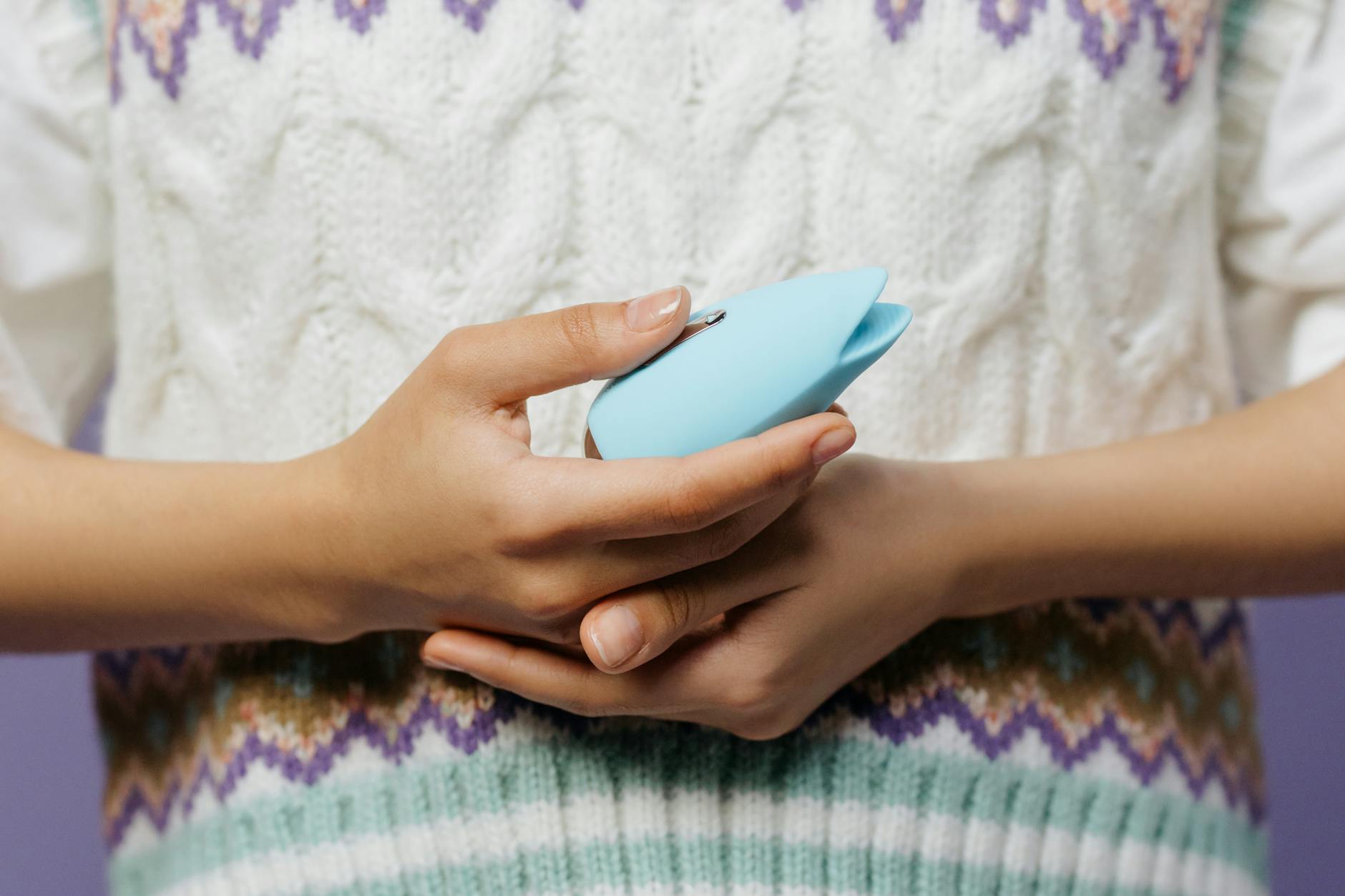
Photo by cottonbro studio on Pexels
If this person is worth your time, they'll be glad you trusted them. And if they're not? You've learned something valuable early. That's not a loss. That's information.
When to loop in the bigger conversation
Once you've introduced the vibrator itself, it can be worth having a slightly bigger conversation about pleasure, desire, and what you both want from sex. Not in a clinical way. More like: "What has felt best for you so far? What do you want to explore? What's off the table?" These are conversations that should happen in any new relationship, and the vibrator is just a natural jumping-off point.
If you're someone with previous partners or prior experience who found that something like a Lemon clitoral vibrator worked better for your sensation than traditional vibrators, that's worth mentioning. Not as a complaint about what your new partner can do, but as information about your body and what brings you pleasure.
FAQ
What if my partner says no?
That's their right. You can ask why. Maybe they're nervous, maybe they need more time, maybe they have past experiences that make this feel weird to them. But "not yet" or "not interested" doesn't mean you can't use toys on your own, and it doesn't mean you're incompatible. It means you need to talk about what that looks like for both of you. Some couples integrate toys eventually. Some don't. Both are valid.
Does using a vibrator with a partner change the dynamic?
It can, but not necessarily in a bad way. It often deepens trust because you're being seen and chosen. Some couples find it makes sex feel more collaborative and less performative. Others find it adds a playful element that was missing. The key is that you're both on board and checking in with each other.
How do I bring this up if I've already been together for years?
The same way, honestly. The framing might shift slightly: "I've been thinking about exploring more with you." If you've been together a long time, you actually have a bigger advantage because you know each other. Use that. "Remember when I mentioned I wanted to try something new? I've been thinking about this toy, and I'd love your thoughts."
What if I'm embarrassed that I want this?
You're not embarrassed. You're nervous about being judged. There's a difference. Embarrassment is internal shame. Nervousness is not knowing how someone will react. Once you tell them and they react fine, the nervousness usually evaporates. The embarrassment often does too, because you realize it was never actually warranted.
Is it weird if I want to use a lemon vibrator and my partner doesn't want to participate directly?
Not weird at all. Some partners want to be hands-on. Others prefer to be present in a different way. "I'm going to use this while you watch," or "I'm going to use this, and you can touch me how you'd normally touch me," or "I want you to use this on me," are all different scenarios. They're all valid. The point is that your partner knows it's happening and is okay with it.
Should I mention past vibrator use before bringing up a new one?
Not necessarily on date three. But once you're becoming intimate and talking about preferences, yes. It's part of knowing you. You wouldn't hide that you've had other partners or other experiences. This is similar. It's information about what brings you pleasure, and that's worth sharing.
What if I want to use a lemon clitoral vibrator during partnered sex but I'm worried about making my partner feel inadequate?
Talk about it first. Tell them exactly what you like about it: "The sensation is different from anything else, and I find it makes me come faster," or "I like it because it lets me focus on how you feel instead of working to get there myself." Then, during sex, keep the intimacy markers in place. Touch them. Make eye contact. Make sounds. Let them know through your body language that they're still the center of this, not the toy.
The real thing
Introducing a vibrator to a new partner doesn't have to be awkward because it's actually an invitation. You're inviting them into your pleasure. You're trusting them with a part of you that matters. That's not scary. That's brave, and most people recognize bravery when they see it.
If you need support navigating relationship dynamics or intimacy conversations beyond this, that's what I'm here for. Reach out through our contact page, and we can talk through what's specific to your situation.
Your pleasure matters. Sharing it with someone you trust makes it better, not weirder.