Let's talk about why your clitoris hurts
Clitoral pain and sensitivity isn't weakness or dysfunction. It's a signal that something about how you've been touching your body needs to change. Maybe direct vibration feels like static on raw nerves. Maybe even light contact makes you wince. Maybe you've had years of frustration thinking you were broken, only to realize the toy was the problem.
Here's the thing. Most vibrators use percussion or rotation. They push or spin directly against tissue. For a clitoris that's easily overwhelmed, inflamed, or dealing with nerve sensitivity, that's like turning up the volume when someone's already overstimulated. The Lem and other lemon vibrators work on a completely different principle. They use suction and gentle pulsing, which creates sensation through tissue engagement rather than direct mechanical pressure. For sensitive bodies, this changes everything.
What makes clitoral tissue sensitive in the first place
Sensitivity isn't random. There are real physiological reasons why your clitoris might feel tender, raw, or overstimulated.
First, the clitoris has 8,000 nerve endings in a space the size of a pea. That density means it's legitimately sensitive to begin with. Add inflammation (from friction during sex, from sitting pressure during the day, from tight clothing), and those nerves light up faster.
Second, hormonal fluctuations change tissue thickness and blood flow. During certain cycle phases, more congestion means more sensitivity. Hormonal birth control can thin the tissue. Stress and anxiety tighten the pelvic floor, which pulls everything taut and reduces tolerance. Age and estrogen shifts change tissue elasticity.
Third, past experience matters. If you've had painful sex, overuse from aggressive vibrators, or been touched in ways that weren't consensual, your nervous system learns to protect. That's not dysfunction. That's your body doing its job. But it means typical vibration intensity feels threatening instead of pleasurable.
Why friction-based vibrators often make it worse
Most clitoral vibrators are designed like tiny wands or bullets. They use rapid motion to create stimulation. This works brilliantly for many people. But for sensitive tissue, this approach is like using sandpaper when you need silk.
Friction-based toys require consistent contact and pressure. Even on the lowest setting, they're essentially rubbing your clitoris thousands of times per minute. For sensitive tissue, this triggers inflammation, friction damage, and pain after a few minutes. The more you use them, the more irritated things get. It becomes a cycle. Pain leads to avoidance, which leads to tension, which makes the next attempt even more painful.
This is why so many people with clitoral sensitivity end up thinking they can't use vibrators at all. They've only tried the friction kind.
How suction changes the equation
Suction-based toys like the Lem work differently. Instead of rubbing, they gently draw tissue upward and release. This creates a massaging sensation through the tissue rather than across it. The stimulation comes from the pattern and pulse, not from mechanical friction.
Why does this matter for sensitive tissue? Three reasons.
First, suction reduces friction. You're not grinding against the clitoris. You're engaging the whole area through gentle pressure and release. This means less inflammation and less tissue damage.
Second, the sensation is diffused. Suction spreads stimulation across the clitoral complex rather than focusing all intensity on one tiny point. It's more like a massage than a direct strike.
Third, you have control over intensity without changing the toy itself. The Lem has multiple intensity levels. But more importantly, how you position it matters. Slight movement, different angles, and changes in contact all shift the feeling without needing a more aggressive toy.
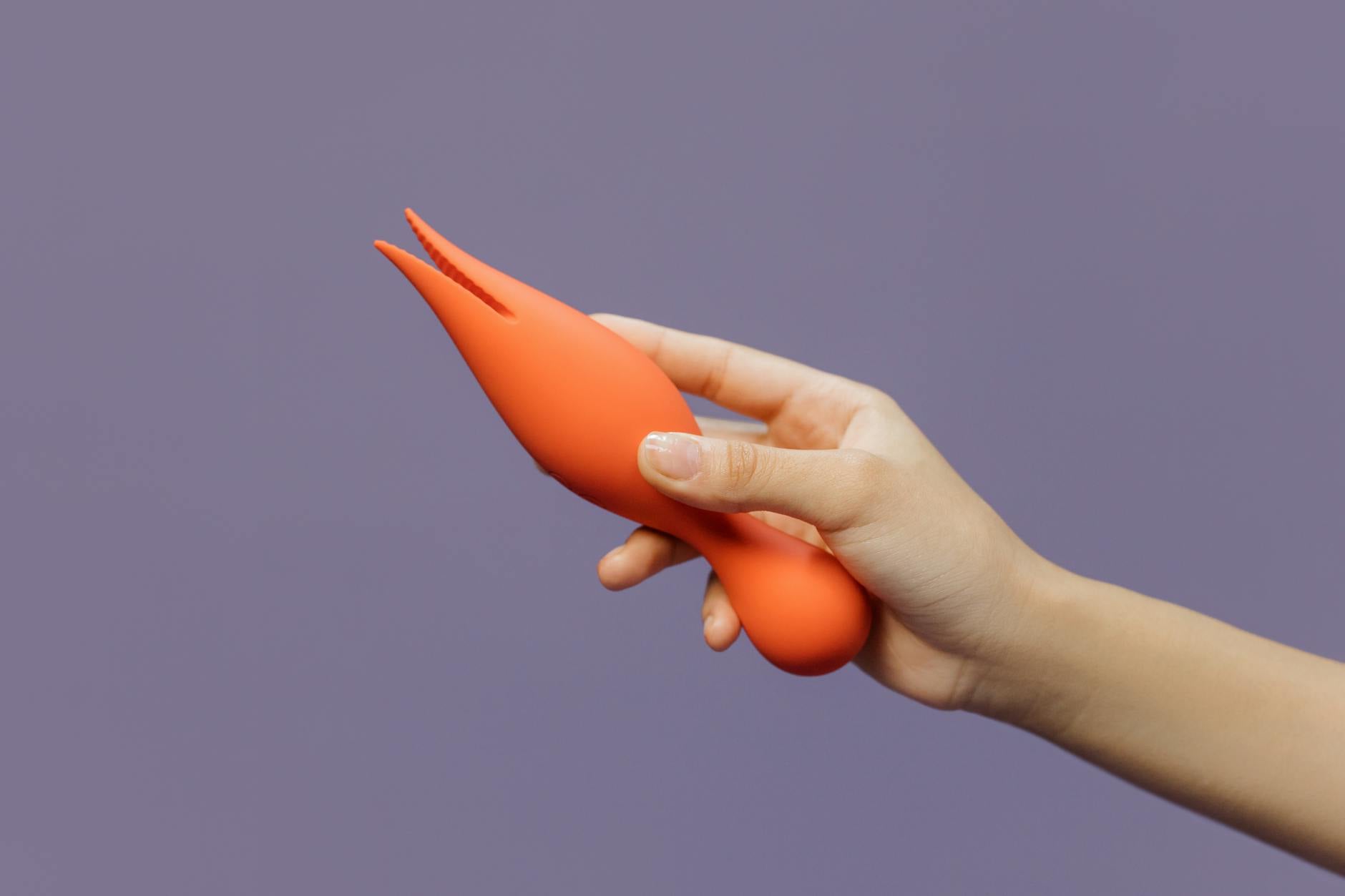
Photo by cottonbro studio on Pexels
The setup that actually helps sensitive tissue
If you've decided to try a lemon vibrator, here's what makes the difference between pleasure and pain.
Warmup matters more. When tissue is cold and unstimulated, it's less tolerant. Spend 10-15 minutes on non-penetrative touch before you introduce the toy. Touch your inner thighs, your stomach, your breasts. Let blood flow to the area. Your clitoris will be more engorged and forgiving.
Start on the lowest setting. Always. Even if it seems impossibly gentle, begin there. Many people find that levels 1 and 2 on the Lem create more sensation than you'd expect because suction is efficient. You can always turn up. You can't unring a bell if you've overstimulated.
Angle matters. Don't aim straight down. Try coming at the clitoris from the side or from below. Different angles change which parts of the clitoral complex engage. You might find that one angle feels open and pleasurable while another feels raw.
Don't force full contact. You don't need the toy to seal completely. Let it hover slightly, creating a gentler suction. This is especially true if you're building tolerance. Partial contact = partial intensity.
Add lubricant. Even if you don't usually need it, lubrication changes how the toy feels against sensitive tissue. It creates a smoother interface and reduces any friction from edges or seams. Use water-based lube (silicone lube can degrade the toy material).
Pain is information. Respond to it.
If something hurts during use, stop immediately. This isn't willpower testing. This is data.
Short, sharp pain usually means friction or too much direct pressure. Adjust the angle, reduce intensity, or add more lube. Burning or rawness usually means either inflammation is already present or you're overstimulated. This calls for a break and possibly a warm compress later.
Dull aching afterward suggests you went too long or too intensely. Scale back the duration and intensity next time. Most people with sensitive tissue do better with 10-15 minute sessions rather than extended play.
If pain persists across multiple sessions, get checked out. Vulvodynia, pelvic floor dysfunction, and other conditions are treatable but need professional diagnosis. You shouldn't have to white-knuckle through pleasure.
Building tolerance without pushing
Tolerance changes over time, but it's not about forcing more intensity. It's about consistency and nervous system safety.
Use your lemon vibrator in ways that feel good, not ways that hurt. If level 2 is your sweet spot, level 2 is your answer. There's no prize for graduating to higher intensity. The goal is pleasure, not achievement.
Consistent, gentle use often improves tolerance more than occasional intense sessions. This is because your nervous system learns that the toy is safe, that it doesn't cause harm, and that it's okay to stay aroused. Regular pleasure builds confidence in your body.
If you're partnered, communicate about this. "I like it on level 2" isn't less-than. It's information your partner needs to make you feel good.
When to work with a specialist
If clitoral pain is severe, affects all touch, or has been present for months, see a pelvic floor physical therapist or a vulvovaginal specialist. Conditions like vulvodynia, vestibulodynia, or pelvic floor hypertonia are real and responsive to treatment. Suction toys are helpful tools, but they're not a substitute for diagnosis when pain is significant.
Similarly, if you think hormonal changes are driving sensitivity, talk to your doctor. Birth control adjustments, topical estrogen, or other interventions can help. You don't have to live with pain as the price of pleasure.
The actual experience most people report
When someone with sensitive clitoral tissue tries a suction-based lemon vibrator for the first time, the most common reaction is relief. Not just relief from pain, but relief at discovering that pleasure is possible. That their body isn't broken. That the right tool makes the difference.
Many people describe the sensation as gentler, warmer, and more diffuse than vibrators they've tried before. Some find that they can stay aroused longer because there's no building frustration or pain. Others report that the sensation feels more internal, engaging the whole clitoral complex rather than just the surface.
None of this is guaranteed, because bodies are individual. But if friction-based toys have left you in pain or frustrated, a lemon clitoral vibrator designed around suction might be the reset you need.
FAQ
Can suction toys cause pain if I have vulvodynia?
Vulvodynia involves widespread vulvar pain that can make any touch difficult. Suction toys are gentler than friction-based vibrators, but they're not a cure for vulvodynia. If you have this diagnosis, start with the lowest setting, work with a pelvic floor specialist, and prioritize what feels safe over what seems "supposed" to feel good. Many people with vulvodynia use suction toys successfully, but with careful attention to their body's signals.
How long does it take to feel comfortable using a lemon vibrator with sensitive tissue?
Some people feel comfortable immediately because the sensation is so different from what they've tried before. Others need a few sessions to build trust that the toy won't cause pain. There's no timeline. Start where you are and let your comfort guide the pace.
If suction toys feel better, does that mean I have unusually sensitive tissue?
Not necessarily. Suction-based lemon vibrators work well for lots of bodies, regardless of sensitivity. Some people just prefer the sensation. Sensitivity exists on a spectrum, and preference is individual. Your clitoris might simply respond better to this type of stimulation than to others.
Is it normal for my clitoris to hurt after using a vibrator, even on low settings?
No. Mild warmth or slight sensitivity is normal, but actual pain isn't. If you're experiencing pain, reduce intensity further, shorten the session, add more lubricant, or try a different angle. If pain persists even at the gentlest settings, something else might be going on and a specialist evaluation is worth considering.
Can I use a lemon vibrator if I'm on antidepressants that affect sensation?
Yes. If antidepressants have dulled your sensation, a lemon vibrator with adjustable intensity gives you options to find what works. Start low and adjust upward as needed. The efficiency of suction means you might feel more than you'd expect even on lower settings.
Do I need special lubricant for suction toys?
Water-based lubricant is best. It works smoothly, doesn't degrade silicone, and creates an even interface between the toy and your skin. Avoid silicone lubes with silicone toys, as they can break down the material over time.
Your pleasure matters
If you've spent years thinking vibrators weren't for you because they caused pain, that was about the wrong tool, not about your body. A lemon clitoral vibrator designed around suction works differently. It's gentler, it's responsive to adjustment, and it meets sensitive tissue where it actually is instead of forcing it to adapt.
Start slow, listen to your body, and give yourself permission to enjoy what actually feels good. That's the whole point.
Have questions about what might work for your body? Reach out to us and we can help you figure out what might be the right fit.