Let's start with the honest part
Orgasms can feel flat. They can arrive without much buildup, peak without much drama, or disappear altogether when you're expecting them. If this is happening to you, you're not broken. Your body isn't failing you. But something has changed, and that change deserves an explanation.
Intensity isn't fixed. It moves. The orgasms you felt at 25 don't look like the ones at 45. Stress reshapes them. Medication flattens them. Life transitions muffle them. And sometimes, the solution isn't trying harder. It's understanding what's happening, then using tools like lemon clitoral vibrators differently to rebuild what feels missing.
What actually causes orgasms to lose intensity
Orgasm intensity comes from three things working together: blood flow, nerve sensitivity, and mental focus. When one of those falters, the whole experience gets quieter.
Here's what disrupts them.
Chronic stress and cortisol. When you're in sustained stress mode, your nervous system camps in fight-or-flight. Your brain is sorting threats, not sorting pleasure signals. Blood diverts from your genitals to your large muscles. Nerve endings become less responsive. Research shows that people under high cortisol for months report duller sensation and weaker orgasmic response. This isn't imaginary. It's biology.
Medications and SSRIs. Selective serotonin reuptake inhibitors (SSRIs) for anxiety or depression directly blunt orgasm intensity in 20-40% of users. Some blood pressure medications, antihistamines, and hormonal contraceptives have the same effect. Your doctor didn't mention this because they assume you won't ask. But ask anyway.
Hormonal shifts. Estrogen fluctuations don't just affect lubrication. They change clitoral blood flow and nerve sensitivity. The same applies to thyroid dysregulation, which affects metabolism and sensation everywhere. If your thyroid is off, so is your nervous system's capacity to transmit pleasure signals clearly.
Relationship fatigue or disconnection. When emotional intimacy frays, arousal requires more effort. Your nervous system isn't relaxed enough to go deep. Orgasms feel rushed, incomplete, or frustratingly distant. You're physically present but mentally somewhere else.
Pelvic floor tension. A hypertonic pelvic floor (muscles that stay contracted instead of relaxing fully) actually prevents strong orgasmic release. It's like trying to scream with your throat locked. The sensation gets trapped.
Why sensation fades even when desire is still there
This is the confusing part for most people. You still want sex. You're still attracted. But the payoff feels like watching someone else's experience through frosted glass.
Sensation and desire live in different neural pathways. You can have full desire and muted sensation. You can be physically capable of orgasm but unable to feel its crest. This matters because it means the fix isn't about motivation. It's about retraining your nervous system and your tissues to respond.
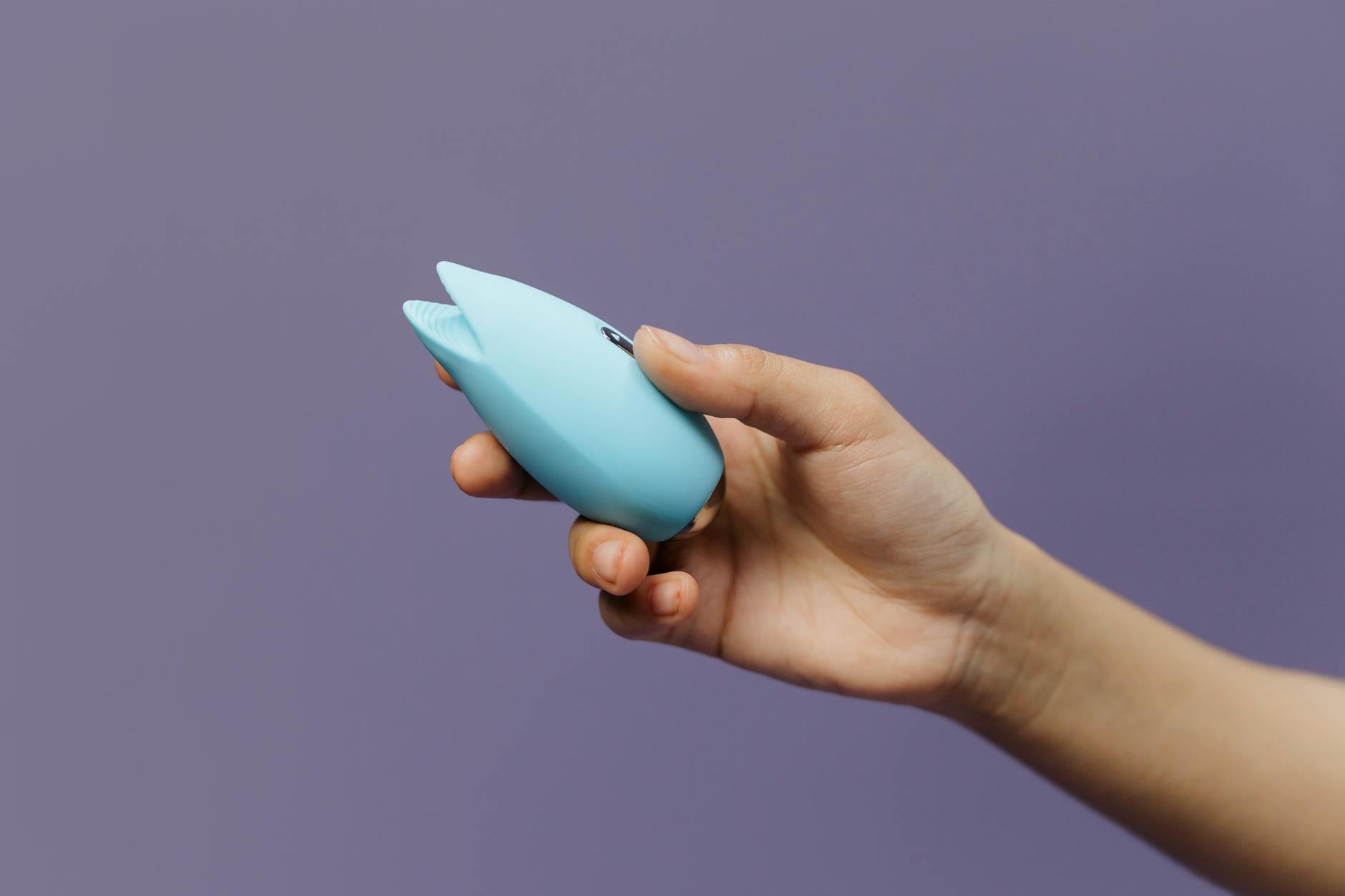
Lemon clitoral vibrators help here in a specific way. Unlike traditional vibrators, which provide sustained vibration, lemon suction toys work through rhythmic air-pulse stimulation. That pulse pattern can wake up nerve endings that have gone quiet under stress. It creates a different kind of signal that sometimes gets through when regular vibration doesn't.
The physical approach that actually works
Start here, and do this alone before trying it with a partner.
Reset your baseline by focusing on sensation, not orgasm. Stop targeting the finish line. Spend 10-15 minutes with a lemon clitoral vibrator at the lowest setting, just noticing what you feel. Not judging it. Not pushing for more. Noticing. Most people's intensity returns when they stop white-knuckling toward it.
Use pattern variation. Lemon sexual toys like the Lem offer multiple rhythms. Don't stay on one. Switch between patterns every 2-3 minutes. This forces your nervous system to stay engaged instead of habituating to the same signal.
Build warmup time. If intensity has faded, your body probably needs longer to build arousal. Budget 20-25 minutes instead of 10. Let blood slowly accumulate in the tissue. Let your breathing deepen. Orgasm intensity is partly about the climb, not just the peak.
Add breathing work. Shallow breathing during sex is the enemy of intensity. As you use lemon vibrators, deliberately breathe into your belly. Inhale for 4 counts, hold for 4, exhale for 4. This oxygenates tissue and keeps your nervous system in a slightly more relaxed state, which paradoxically makes sensation sharper.
Experiment with location and angle. The clitoris is larger than most people think. The external part is just the glans. Tissue extends internally. If direct stimulation to the glans feels flat, try applying the lemon suction toy slightly off-center or at a different angle. Sometimes a half-inch shift changes everything.
When intensity is a symptom of something bigger
If dulled orgasm arrived alongside other changes, it's worth investigating.
Arrived with mood changes? Talk to your prescriber about SSRI timing or switching. Some people take their dose before bed instead of morning. Others switch to a different class of antidepressant. Bupropion, for example, has less sexual side effect than sertraline.
Arrived with fatigue, weight changes, or temperature swings? Get your thyroid checked. TSH, free T3, free T4, plus antibodies if your doctor will order them. Thyroid dysfunction is wildly under-diagnosed in people over 40, and it dulls sensation everywhere.
Arrived with relationship strain or distance? The intensity won't return until the emotional space opens. You can use lemon adult toys all you want, but your nervous system won't relax into pleasure if your partner is checked out. This isn't a solo fix. It's a conversation.
How to rebuild intensity with a partner
If your partner has noticed the shift too, start with radical honesty. Not blame. Not defense. Just: "My orgasms have felt flatter lately and I don't know why. I want to figure this out with you."
Then bring lemon clitoral vibrators into the experience without making it feel like an emergency solution. Frame it as exploration, not remediation. "I want to try something that might help me feel more. Will you watch? Will you touch me while I use it?"
The simple act of having a witness changes the nervous system state. You're less alone in the sensation. Your partner seeing you pursue your own pleasure often rekinddles theirs too.
If your partner is hesitant, read this together: Why Lemon Vibrators Work Better Than Traditional Vibrators for Clitoral Sensitivity. Sometimes the education helps.
When to seek outside help
If orgasm intensity hasn't shifted after 4-6 weeks of consistent play with lemon vibrators, and you've ruled out stress and medication side effects, consider talking to a sex therapist or a doctor who specializes in sexual health. Neurological conditions, hormonal imbalances, or psychological blocks sometimes need professional untangling.
Also consider that intensity changes over a lifetime. The orgasms you had at 22 don't need to be the template. Sometimes they get quieter. Sometimes they get more focused or localized. Sometimes they transform into something that looks different but feels just as complete. That's not loss. That's evolution.
The mindset shift that helps most
Orgasm is not a performance metric. Intensity is not a measure of your sexuality. You are not broken because climax feels softer than it used to.
Your body is giving you information. It's saying: something in your life needs attention. Maybe it's stress. Maybe it's medication. Maybe it's emotional distance. Maybe it's just a phase. The intensity will often return once you listen to what the muting is trying to tell you.
Lemon clitoral vibrators are a tool for that conversation. They're not a fix-it. They're a way to stay connected to sensation while you figure out what's really happening. And sometimes, just the act of turning toward your own pleasure instead of away from it shifts everything.
People also ask
Why do orgasms feel less intense after starting a new antidepressant?
Antidepressants, especially SSRIs, increase serotonin in your brain but can suppress dopamine and norepinephrine in the pelvic region. These two chemicals are crucial for orgasmic intensity. The effect often improves after 6-12 weeks as your body adapts, but not always. If it doesn't, talk to your prescriber about timing the dose differently, adding a medication that counteracts the sexual side effect, or switching to a class that has fewer sexual effects. Don't just suffer through it.
Can stress actually make orgasms weaker or make you unable to orgasm?
Absolutely. Chronic stress keeps your nervous system in sympathetic (fight-or-flight) mode. Your body deprioritizes pleasure and reproductive function when it thinks you're under threat. Cortisol is high, blood flow to the genitals decreases, and nerve sensitivity drops. This is why orgasms often return when life calms down, or when you add a deliberate relaxation practice like meditation or breathwork. The solution isn't willpower. It's nervous system recovery.
Does using lemon vibrators too much make orgasms feel weaker?
Not inherently. The brain can habituate to any repeated stimulus if you use the same pattern at the same intensity constantly. This is why the pattern variation in lemon clitoral vibrators (multiple rhythms) is so useful. By switching patterns, you prevent habituation. That said, if you're using any vibrator for 45 minutes straight multiple times daily, your nerve endings will become less responsive. Moderation and variation both matter.
Why do orgasms sometimes feel less intense with a partner than alone?
Performance anxiety, fear of being loud, worrying about how you look, or not trusting your partner enough to fully relax. Your nervous system can't access pleasure signals when it's scanning for judgment. The fix is usually emotional, not physical. Reassurance, privacy, and building safety with your partner help. Using lemon sexual toys together can also reset the dynamic by making pleasure mutual and curious instead of goal-oriented.
Can intensity return if it's been gone for years?
Usually, yes. The nervous system is plastic. It can relearn sensation. But it requires patience and consistency. Four weeks of occasional play probably won't do it. Three months of regular, intentional exploration often does. You're literally rewiring your brain's response patterns, and that takes time. Also, intensity might look different than it used to. That doesn't mean it's not there.
What if lemon vibrators don't help restore intensity?
That's useful information. It tells you the issue is probably not mechanical, but neurological, hormonal, or relational. That's when a conversation with a sex therapist, endocrinologist, or doctor who specializes in sexual health becomes valuable. They can help distinguish between physical causes and psychological ones. Either way, there's a path forward. It just might not be the vibrator.
The bottom line
Orgasm intensity is not fixed. It shifts with stress, medication, hormones, and emotional connection. When it fades, your body isn't failing you. It's communicating. Lemon vibrators, especially clitoral toys with multiple stimulation patterns, can help you stay present during that conversation and often help rebuild sensation.
But the real work is listening to what the muting is trying to tell you. Once you understand the cause, intensity usually returns. And sometimes, it returns different. That's not worse. That's just a different kind of pleasure, waiting for you to notice it.
If you're ready to explore your sensation, start with intention and without pressure. If you want to talk through what might be dimming your orgasms, we're here. Reach out anytime at /contact.